


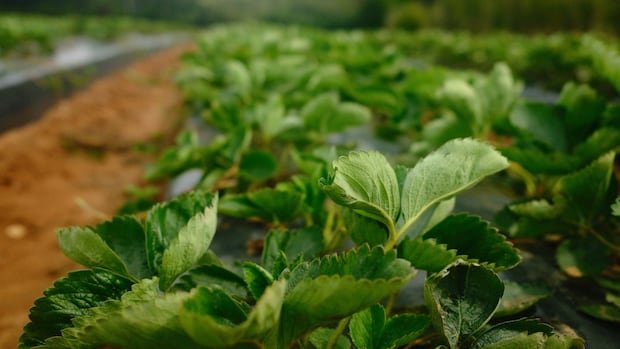

In the screenhouse at the Kentville Research and Development Centre, a variety of strawberry plants can be observed beyond their initial appearance. Research scientist Beatrice Amyotte views the diverse leaves, plant heights, and shades of green as opportunities for developing successful and appealing berry varieties for growers. With Canada’s evolving climate, the challenge of creating resilient plants becomes more complex.
Predictions indicate that Nova Scotia will likely experience increased heat and rainfall in the next decade or two, leading to hotter and wetter conditions. Amyotte highlights the importance of developing varieties that can thrive in various weather scenarios, as climate models suggest a rise in extreme conditions.
The screenhouse, housing 160 strawberry plant varieties, serves as a testing ground for plants destined for nurseries across Canada or field trials at research centers. Amyotte’s work with the Canadian Berry Trial Network involves evaluating plant performance in different Canadian locations over multiple years to identify varieties suited to changing climate conditions.
Grower Philip Keddy, from Charles Keddy Farms near Kentville, acknowledges the challenges posed by climate change, such as fluctuating temperatures and moisture levels affecting crop yields and production costs. Collaborating with the research center, Keddy selects strawberry varieties tailored to his customers’ needs and regional conditions.
Developing climate-resilient berry varieties is a slow process, taking up to 10-15 years for strawberries and even longer for raspberries and blueberries. Amyotte plans to further enhance her breeding efforts by subjecting plants to specific stresses like excess water or heat to mimic climate challenges.
As growers adapt to changing conditions, selecting suitable berry varieties becomes crucial for sustainable agriculture practices. By understanding plant performance under varying conditions, growers like Keddy can make informed choices to navigate the impacts of climate change on berry production.