




In Nova Scotia, the declaration of intimate partner violence as an epidemic has led to some positive changes, according to Meghan Hansford.
She highlights the shift in police agencies acknowledging intimate partner violence as a factor in crimes from the outset and the recent extension of paid leave for individuals escaping abuse.
However, Hansford, a Ph.D. holder specializing in family violence intervention and serving as the program manager at Adsum for Women and Children, emphasizes that non-profit organizations like Adsum require more support to address the escalating crisis.
Despite the increasing rates of gender-based violence, she notes a lack of a proportional response from the provincial government.
The unanimous adoption of a bill in September 2024 officially recognizing intimate partner violence as an epidemic in Nova Scotia was followed by a series of domestic homicides in a short period.
Following a meeting between Premier Tim Houston, government officials, and support groups in early 2025, nearly $24 million was allocated over four years to support the province’s 10 transition houses for women and children escaping violence.
Hansford acknowledges the positive impact of this funding on transition houses but emphasizes that it falls short of what is needed.
What is the funding requirement?
Currently, the annual provincial expenditure on intimate partner violence across all departments stands at $102 million, $6 million below Hansford’s suggested baseline budget.
She proposes an ideal annual expenditure of $108 million based on $100 per capita for Nova Scotia’s population of approximately 1,079,000 people.

She suggests that a transformative expenditure of $194 million, equivalent to $180 per capita, would significantly impact the situation.
Leah Martin, the Nova Scotia cabinet minister overseeing the Status of Women, acknowledges the progress made by the government in the past year, particularly in increased spending.
“While we aim for continued growth in funding, it is essential to ensure alignment between financial resources and objectives,” Martin stated in an interview.
However, Hansford stresses that beyond increased funding, the government must also improve the consistency and manner of fund allocation.
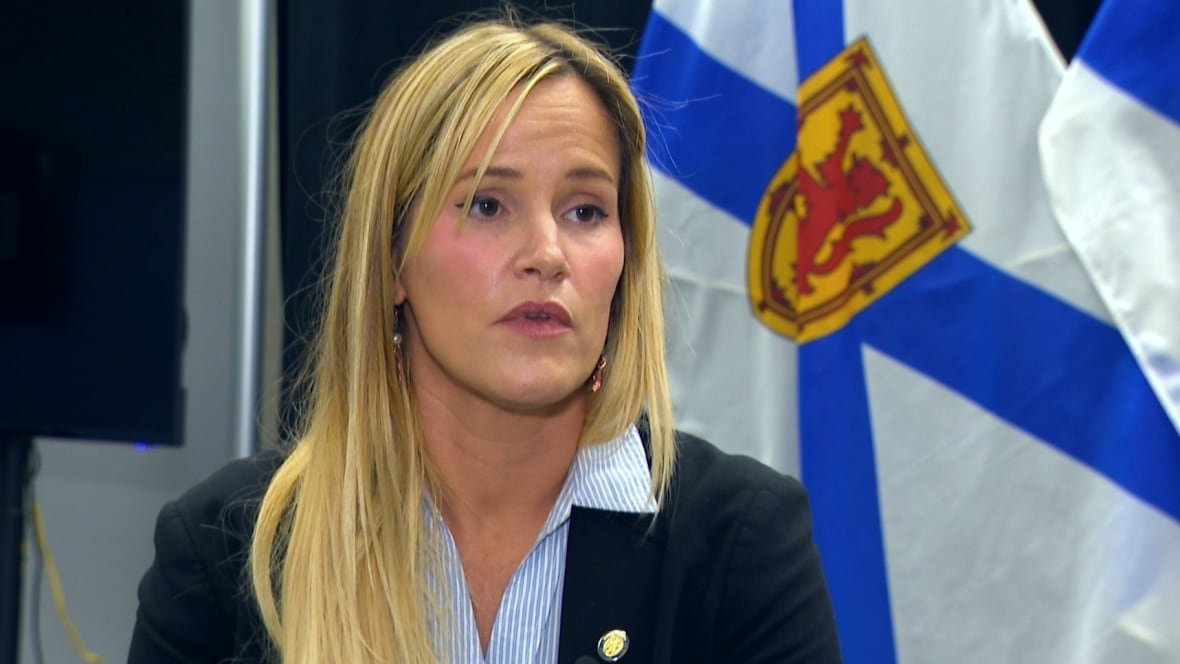
She criticizes the current practice of granting funds annually to groups supporting gender-based violence survivors, emphasizing the need for sustained, core funding that the government has yet to commit to.
High Demand for Ministers’ Table
Martin praises the substantial strides made by the province in responding to intimate partner violence over the past year, highlighting the establishment of the ministers’ table on gender-based violence.
This table, scheduled for its inaugural meeting in October, will be led