


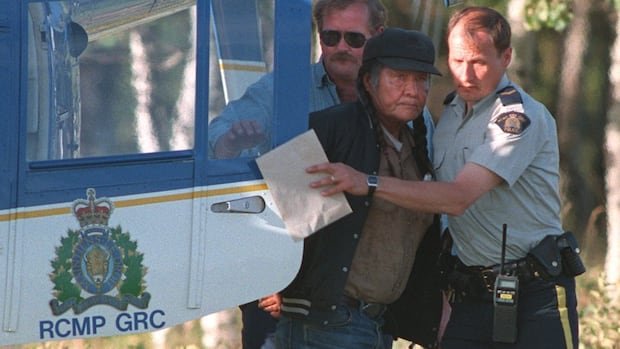

In the early hours of August 18, 1995, a group of heavily armed individuals surrounded the Sun Dancers under the cover of darkness. With faces painted, M-16 rifles, and snipers, they advanced towards an armed First Nations camp at Gustafsen Lake in the B.C. Interior, nearly 270 kilometers northeast of Vancouver.
The tension escalated as the activists occupied a section of a secluded, privately owned cattle ranch following a Sun Dance ceremony in July. Refusing to vacate, they laid claim to the land as unsurrendered Secwepemc territory.
The situation grew more precarious when Sun Dance faith keeper Percy Rosette, alarmed by spooked horses, suspected a potential attack by racist vigilantes. This fear stemmed from a prior incident where local ranchers allegedly intimidated the Sun Dancers with a bullwhip and a derogatory racial slur.
Upon confronting the approaching group in Secwepemc, Rosette fired a warning shot into the air and contacted the RCMP. Unbeknownst to Rosette, the armed group was, in fact, an undercover RCMP tactical team.
This single shot marked the commencement of what was described by a Mountie as “the biggest RCMP operation ever” — the Gustafsen Lake standoff. Over the ensuing weeks, around 400 Mounties discharged up to 77,000 rounds of ammunition, utilizing helicopters, armored vehicles, and hidden explosives in a $5-million paramilitary effort to disband the roughly 20 activists known as the Ts’Peten Defenders.
Three decades later, declassified documents disclosed extensive interest by Canada’s spy agency, CSIS, in Gustafsen Lake. The agency monitored developments in a confidential investigation into “Native extremism,” citing conflicts at Gustafsen Lake and Ipperwash Provincial Park as examples of Native extremists adopting the Mohawk Warrior Society’s armed standoff approach for political objectives.
Kanahus Manuel, a Ktunaxa and Secwepemc activist, expressed validation upon learning about the intensive investigation into Indigenous land defenders. The disclosed documents suggested CSIS viewed Gustafsen Lake as part of a potential terrorist insurgency nationwide, raising it from a local issue to a national security concern.
As debates persist over whether the events at Gustafsen Lake constituted terrorism or resistance, further scrutiny is warranted to evaluate the actions and responses of law enforcement agencies during the standoff.