


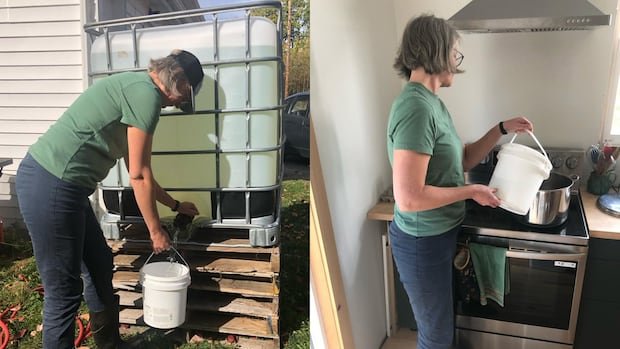

Colleen Freake, a resident of Nova Scotia, has been facing water scarcity issues on her chicken farm due to the ongoing drought in the District of the Municipality of West Hants. With her well drying out since July, she now has to manually transfer water from an outdoor tank to her kitchen for basic tasks like showering. The severe lack of rainfall, labeled as an “exceptional drought” occurring once every 50 years, has forced residents like Freake to rely on municipal water pickups and private water haulers to meet their daily water needs.
The drought has not only impacted Freake’s personal hygiene but also disrupted her farm operations. Concerns about keeping her animals hydrated and maintaining the chicken coop have led to additional financial strain. The municipality’s decision to reduce water pickup hours has further complicated the situation for residents like Freake, who must now travel long distances to access water resources.
To address the water scarcity issue, the municipality has initiated “Operation Make it Rain,” a plan involving pumping water from the Avon River to Mill Lakes, the primary water source for several communities. This emergency measure, approved with a $350,000 budget, aims to enhance water availability for rural areas by increasing water pickup hours. However, meteorologists predict that significant and prolonged rainfall is necessary to alleviate the drought conditions, which may persist in the coming weeks.
Despite the efforts to mitigate the drought’s impact, Freake remains concerned about the long-term consequences on her community and farming activities. The stress and challenges posed by the water crisis highlight the urgent need for sustainable solutions to combat the adverse effects of the ongoing exceptional drought in Nova Scotia.