


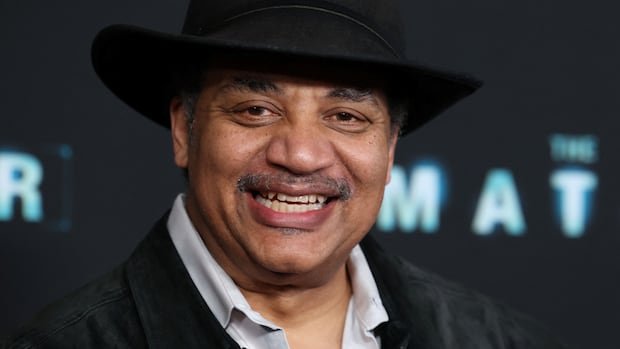

Renowned astrophysicist Neil deGrasse Tyson, known for his podcast “Star Talk,” recently fell victim to a deepfake video falsely claiming he believed the Earth was flat. Despite this incident, Tyson, 67, is currently touring with his talk “This Just In: Latest Discoveries in the Universe!” In a recent interview with CBC News, Tyson discussed the deepfake video, his concerns about misinformation, and the importance of critical thinking in today’s society.
Reflecting on the deepfake video, Tyson expressed worry about the escalating sophistication of such technology and its potential impact on society. He warned that if left unchecked, deepfakes could lead to the downfall of the internet, jeopardizing democracy and civilization itself, particularly in sensitive political environments.
When asked about the state of scientific literacy and critical thinking, Tyson emphasized the need for a greater focus on critical thinking skills in education to combat the spread of misinformation. He suggested that teaching critical thinking as a standalone subject could better prepare individuals to navigate the complexities of today’s information landscape.
Transitioning to cosmic discussions, Tyson shared his ponderings about the vast mysteries of the universe that keep him awake at night. He questioned whether humanity possesses the intellectual capacity to fully comprehend the universe or if it would require a higher form of intelligence beyond our current understanding.
Regarding future advancements in space exploration, Tyson remained optimistic about the potential for significant breakthroughs in the next century. Drawing parallels to past scientific progress, he highlighted the continuous evolution of knowledge and the likelihood of further groundbreaking discoveries in the years to come.
In response to being labeled a “buzzkill” for his scientific critiques of popular media, Tyson defended his role as a science communicator, emphasizing the importance of accuracy and respect for expertise. He compared his scrutiny of scientific inaccuracies in films to a car expert pointing out an anachronistic vehicle in a period movie, highlighting the need for consistent standards in acknowledging expertise across different domains.