


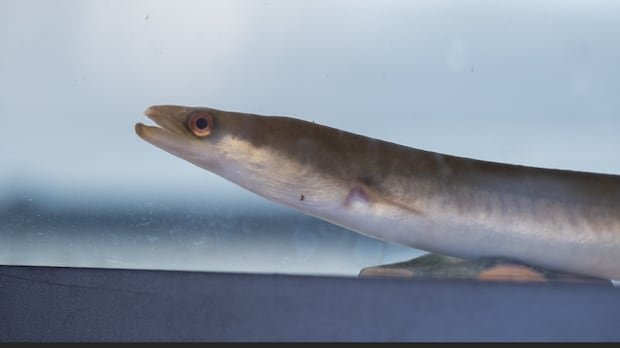

After the recent decision by Canada not to include the American eel under the Species at Risk Act (SARA), some First Nations individuals who have strong cultural and spiritual connections to the eel are expressing concerns about the choice.
Charles Doucette, the fisheries director at Potlotek First Nation on Cape Breton Island, expressed his disappointment, emphasizing the lack of visible efforts to support the eel population. He recalled the days when his father used to bring home eels to dry and share with family and friends, highlighting the significant decline in eel population around Bras d’Or Lakes and southern Cape Breton.
Despite being classified as “threatened” by the Committee on the Status of Endangered Wildlife in Canada in 2012, the American eel has not been listed under SARA for over a decade. Instead, the federal government plans to manage eel populations under the Fisheries Act, a decision that has been praised by commercial elver fishers in Atlantic Canada.
In Nova Scotia, where debates over eel conservation often spark disagreements among various groups, concerns about the dwindling eel population are growing evident. According to data from the Atlantic Canada Conservation Centre, eel populations in Nova Scotia are deemed vulnerable, imperiled in Prince Edward Island, and apparently secure in New Brunswick.
The decline in eel numbers is also noticeable in Kitigan Zibi Anishinābeg, where the once abundant eels in the Ottawa River have drastically reduced over the years. Kristi Leora Gansworth, reflecting on her deep connection to eels through her heritage, shared how the decline in eel population has impacted their cultural practices and memories.
The efforts to protect eels have brought together communities like Kitigan Zibi and Mi’kma’ki under the network named Eel’s Back, initiated by the late Elder William Commanda. Members of this network meet to discuss ways to safeguard eels while incorporating Indigenous knowledge and self-governance.
The decision not to list the eel under SARA has raised concerns among experts, such as marine biologist Shelley Denny, who highlights the importance of addressing habitat loss and advocating for international collaboration in eel conservation efforts.
As the management measures for the upcoming elver season are awaited, the debate on eel conservation continues to unfold, emphasizing the need for sustainable practices and collective action to protect this culturally significant species.