


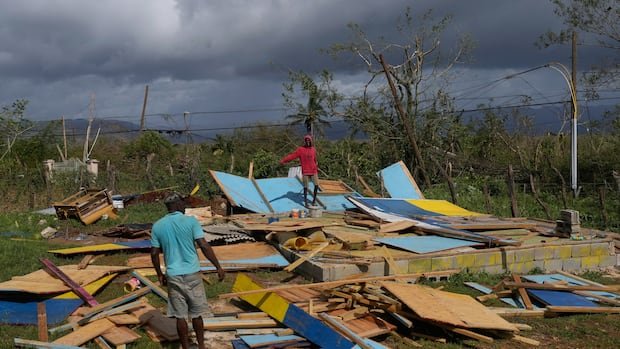

Jamaica has spent the last ten years establishing financial safeguards against natural disasters. Following the destructive path of Hurricane Melissa through the country, including homes, roads, and critical infrastructure, Jamaica’s preparedness measures are proving beneficial. The country had issued a $150 million catastrophe, or “cat,” bond that activates under specific hurricane strength and path conditions.
The cat bond’s activation is determined by the hurricane’s central pressure upon landfall, as explained by Florian Steiger, CEO of Icosa Investments. Verification by a third party is required, but the threshold has been clearly surpassed in this instance. Consequently, payouts are imminent.
Jamaica stands to receive funds promptly, supported by a range of disaster risk mitigation tools, such as insurance policies covering extreme weather events and access to lines of credit from institutions like the World Bank and the Inter-American Development Bank. Conor Meenan, a risk financing adviser at the Centre for Disaster Protection, commended Jamaica’s comprehensive disaster strategy as one of the most advanced globally.
The country’s Finance Ministry reports having around $820 million available for post-disaster financing needs. While this sum may not cover the projected damages from Hurricane Melissa, insurance-related financing will facilitate swift restoration of vital services like roads, healthcare, and telecommunications.
Jamaica’s $150 million catastrophe bond, issued with the assistance of the World Bank in 2024, was funded by the country itself and purchased by investors primarily from North America and Europe. The bond is set to mature in 2027, spanning four hurricane seasons. This marks Jamaica’s second cat bond issuance, with the first in 2021 funded by donors and providing $185 million in disaster coverage.
The cat bond functions differently from traditional insurance by basing payouts on hurricane severity rather than damage assessment. Triggers are tied to the hurricane’s central air pressure and its path over specific regions of Jamaica. Hurricane Melissa’s landfall pressure of 892 millibars indicated a severe storm, qualifying Jamaica for a full bond payout.
While the $150 million loss might appear significant, experts note it has minimal impact on the market due to its size relative to the overall market. The appetite for catastrophe bond investments in developing countries is growing, with analysts viewing them as a means to spread climate risk effectively.
Jamaica’s innovative strategy has the potential to serve as a model for other climate-vulnerable nations in the region. As the country leverages its insurance and financing mechanisms post-disaster, it sets an example for proactive disaster preparedness amid escalating climate challenges.
In conclusion, while catastrophe bonds are not a standalone solution, they play a crucial role in enhancing global economic resilience and risk-sharing efforts, potentially paving the way for a more secure future against climate-related disasters.