



In the upcoming year, the Voyager 1 robotic space probe, which holds the record for being the farthest object launched from Earth, is set to reach a distance of one light day away from our planet after nearly fifty years of travel. Voyager 2, its companion spacecraft, currently sits over 23 billion kilometers away from Earth. By November 2026, a radio signal traveling at the speed of light will require 24 hours to reach Voyager 1 and another day for a response signal to return to Earth, resulting in a two-day wait for mission control scientists to confirm the spacecraft’s status. Voyager 2 follows a slightly slower trajectory and is expected to reach this milestone roughly a decade later.
Launched in 1977 from Cape Canaveral on a mission to explore the outer planets of Jupiter and Saturn, Voyager 2 continued its journey to Uranus and Neptune, becoming the sole spacecraft to visit these distant worlds. The gravitational pull of these massive planets provided the Voyagers with the necessary velocity to break free from the sun’s gravity, propelling them out of our solar system at speeds exceeding 60,000 km/hr, though relatively slow in the vast expanse of our galaxy.
The Voyager missions epitomized a quest for discovery akin to historical explorers such as Magellan, with the spacecraft capturing never-before-seen images and data as they whizzed past planets without stopping, much like an eager tourist snapping photos from a moving bus. Voyager 2’s voyage to Neptune, marking the outer edge of our solar system, spanned twelve years, underscoring the immense distances and time scales involved in space exploration.
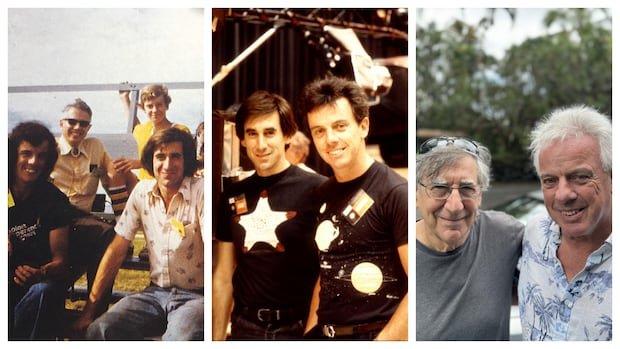
As the Voyagers continue their interstellar journey, those involved in the mission have aged over the decades, reflecting the profound passage of time and distance covered by the spacecraft. Voyager 1’s fifty-year trek to reach a light day translates to a staggering 18,250 years to cover a single light year, or 9.46 trillion kilometers, a fundamental unit in astronomy. Proxima Centauri, our closest star at 4.25 light years away, would require Voyager over 77,000 years to reach, highlighting the vastness of space and time.
Traveling to the center of our Milky Way Galaxy, approximately 30,000 light years away, or to the opposite side at 100,000 light years, would extend Voyager’s journey beyond the age of Earth itself. Space exploration, with its immense distances and durations, underscores our infancy in traversing the cosmos, symbolized by the slow progress akin to toddlers learning to walk among the stars.
While advancements like plasma rockets offer potential reductions in travel times to planets, the vastness of space and the limitations of current technology emphasize the enduring challenges of interstellar travel. The Voyagers, designed to last for billions of years, stand as enduring testaments to human ingenuity and the boundless expanse of the cosmos.