


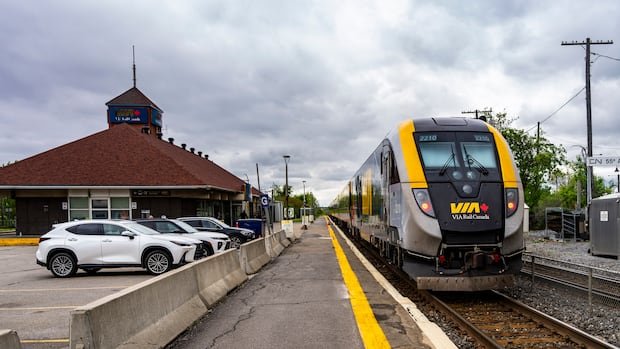

Natalie Crenna, like many others, relocated from a major city to a smaller town due to the COVID-19 pandemic, seeking more affordable housing and proximity to family. However, she is now contemplating a return to Toronto not because her office mandated in-office work but due to the escalating cost of train travel, which she finds unsustainable. Crenna, 41, shared with CBC News that she is currently spending approximately $1,200 monthly on train tickets while working at the Ontario Teachers’ Pension Plan in Belleville, Ontario, about 190 kilometers east of Toronto.
Numerous passengers have voiced concerns to CBC News about the impact of Via Rail’s pricing on their travel decisions. Many individuals commute from smaller towns along Via Rail’s Quebec City-Windsor Corridor into major cities like Toronto for in-office workdays. The issue lies not in an overall increase in ticket prices, but rather in Via’s dynamic pricing model and limited flexibility, leaving frequent commuters with little choice but to pay higher fares.
Via Rail explained in an email to CBC News that their pricing structure is determined by factors such as train occupancy and proximity to the departure date, with last-minute bookings on popular trains typically incurring higher costs. They stated that booking approximately two weeks in advance and selecting off-peak travel times usually result in the lowest fares.
Despite this, Richard Stoltenberg, 52, of Cobourg, Ontario, highlighted that unpredictable work schedules can make it challenging to plan ahead. Stoltenberg, a consultant, often travels the 120-kilometer distance from Cobourg to Toronto on short notice, sometimes paying close to $200 for a mid-week round trip. While he values the environmental benefits and convenience of train travel, he emphasized that the increasing costs are making it unaffordable.
Via Rail’s pricing data, not publicly available, showed a modest 2.5% rise in the average economy ticket price along the Quebec City-Windsor Corridor from 2022 to 2025. Tim Hayman, Atlantic president of Transport Action Canada, noted that Via’s pricing strategy underwent significant changes in late 2023, introducing more fare fluctuation through advanced yield management techniques.
As a Crown Corporation funded by the federal government, Via Rail faces pressure to minimize subsidies and maximize passenger revenues. While Via offers discount cards for frequent travelers to save on economy fares, some passengers find the savings minimal and not always beneficial due to restrictions on fare classes and promotions.
Sonja Smith, residing in West Lorne, Ontario, expressed that while she has advocated for rail travel, escalating costs have made it financially burdensome. Smith, a voiceover casting specialist who frequently travels to Toronto for work, cited a noticeable increase in ticket prices, making rail travel unaffordable for her.
Via Rail’s dynamic pricing model, detailed on their website’s FAQ, has posed challenges for commuters, compounded by reduced commuter-focused services since the pandemic, including fewer trains and stops for some communities. The discontinuation of commuter passes in 2022 has also been lamented by some passengers, impacting their travel cost-effectiveness.