


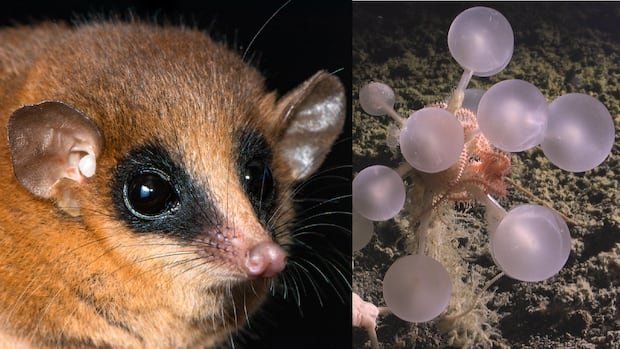

In 2025, the scientific community unveiled a fascinating array of newly discovered species, including a spider boasting exceptionally long genitalia, a caterpillar that adorns itself with its prey’s body parts, and a diminutive opossum dwelling in mountainous terrain.
A recent study revealed that approximately 16,000 novel species are unveiled annually, with the pace of discovery accelerating. Notably, 15% of all known species have been newly cataloged in the last two decades. John Wiens, an ecology professor at the University of Arizona and study co-author, emphasized the significance of this ongoing discovery process.
While many of these species were previously known or observed locally, their formal identification by science is crucial for conservation efforts. Wiens stressed that the first step in safeguarding a species from extinction is acknowledging its existence.
Among the notable discoveries were four tarantula species from the Horn of Africa and Arabian Peninsula, with males possessing remarkably elongated genitalia. The largest species, named Satyrex ferox, exhibits male palps almost as lengthy as their legs, potentially aiding in safe mating interactions.
In Hawaii, researchers encountered a unique caterpillar dubbed the “bone collector,” which incorporates insect body parts into a protective coat. This rare caterpillar, found in a small forest patch, highlights the importance of preserving its habitat.
The deep Southern Ocean yielded 30 newly identified species, including the carnivorous “death-ball” sponge equipped with specialized structures for trapping prey. Additionally, new sea star species and an iridescent scale worm were among the discoveries.
In shallower waters, a stunning sea slug resembling fried eggs was described off the coast of Indonesia. This species, which steals toxins from sponges for defense, showcases vibrant colors as a warning to potential predators.
Canada saw the unveiling of the Okanagan crayfish, a distinct aquatic creature endemic to B.C.’s Okanagan Lake. This endangered species lacks a characteristic white mark on its claw, setting it apart from its lookalike counterpart.
Furthermore, Canadian researchers contributed to the identification of six tube-nosed bat species from the Philippines. These tiny bats, weighing four to 14 grams each, were collected over three decades, shedding light on the region’s biodiversity.
Other noteworthy discoveries include the Pinocchio chameleon from Madagascar and a wolf snake named after the late Steve Irwin. Additionally, a small mouse opossum found in the Peruvian Andes and live-bearing toads from Tanzania were among the intriguing new species described in 2025.