


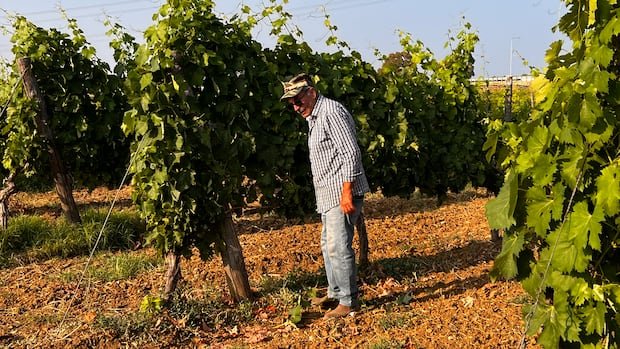

Massimo Tosoni strolls among his vineyards, gazing at the rows of lush greenery shimmering under the blazing sun. In the backdrop, the ancient Etruscan-ruled town of Tarquinia perches atop a hill. Pointing to the nearby Ciliegiolo grapes, renowned for their cherry-like scent, he laments the arid, rock-hard soil devoid of moisture due to prolonged droughts and intense sunlight.
The 73-year-old winemaker reflects on the challenges faced by Italy’s vineyards, mirroring global trends of rising temperatures, erratic weather patterns, and water scarcity. These shifts are compelling vintners to reconsider the fundamental concept of terroir, the intricate blend of soil, climate, and human intervention that shapes a wine’s unique character and essence.
Research indicates that if global temperatures soar beyond 2 degrees Celsius by the end of the century, up to 90% of Italy’s low-lying and coastal wine regions, comprising about a third of the nation’s viticultural area, may no longer be conducive for grape cultivation. This alarming prospect looms over vineyards worldwide.
Italy, a leading player in the global wine market with a $20.7 billion industry representing 10% of the country’s agri-food sector, has witnessed record exports despite climatic challenges like droughts in the south and extreme weather events in the north. In the northern Lazio region near Rome, Massimo Tosoni and his daughter, Martina Tosoni, are part of a wave of vintners adapting to the changing climate, with grapes ripening earlier than before, affecting harvest yields.
Neighboring wine producers are transitioning from traditional varieties like Sangiovese and Montepulciano to the more heat-tolerant Syrah, previously predominant in Sicily. Martina emphasizes water scarcity as the primary threat, prompting a shift towards more efficient irrigation practices and technological innovations to manage climate-related risks.
Collaboration within the wine community, like forming consortia for joint marketing and vititourism initiatives, emerges as a key strategy for resilience amidst mounting challenges. Experts stress the urgent need for the industry to embrace diverse grape varieties and sustainable vineyard practices to cope with the evolving climate.
In Tuscany, Lamberto Frescobaldi, a scion of a renowned winemaking dynasty, underscores the importance of intelligent adaptation in the face of water scarcity. Implementing strategies such as north-facing vineyards, deeper-rooted plants, and innovative frost protection measures, he navigates the complexities of preserving regional wine identities while embracing necessary changes.
As traditions evolve and landscapes transform, the wine industry grapples with the inevitable impact of climate change on grape cultivation and winemaking practices. The poignant reality of disappearing flavors underscores the profound shifts reshaping Italy’s viniculture heritage.