


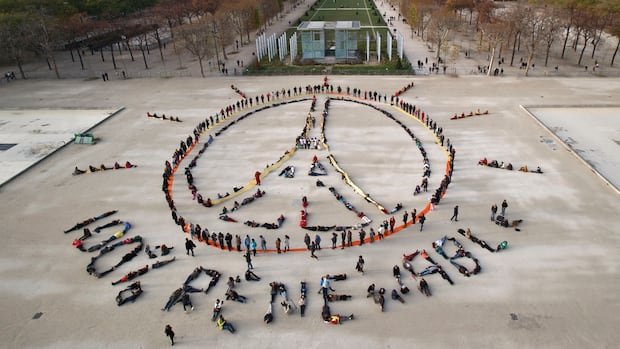

Environmental activists formed a human chain symbolizing the peace sign and spelled out “100% renewable” near the Eiffel Tower during the COP21 UN climate summit in Paris on December 6, 2015. This event marked the signing of the landmark Paris Agreement, the world’s initial global pact aimed at combatting climate change. The agreement, adopted by nearly 200 nations, pledged to limit global warming to “well below” 2 degrees Celsius compared to pre-industrial levels, with efforts to restrict it to 1.5 degrees Celsius.
A decade later, these same countries will convene in Belem, Brazil, from November 10 to 21 for the annual United Nations climate summit, COP30. Throughout the past ten years, atmospheric greenhouse gas levels responsible for climate change and global temperatures have continued to rise to unprecedented levels.
In terms of climate change progress since the Paris Agreement, significant developments have occurred in various aspects including the actual climate conditions, advancements in clean technologies, policy implementations by countries, and global financial investments. For instance, the average global temperature has increased by more than 0.3 degrees Celsius since the agreement was signed. According to the 2025 UN Emissions Gap Report, current projections indicate a potential 2.3 degrees Celsius increase in warming by 2100 if all climate commitments are fulfilled.
The growth of clean energy technologies like electric vehicles (EVs) and renewable power generation has been notable over the past decade. EV sales, in particular, have shown promise, although not meeting the projected targets. Additionally, renewables have surpassed coal as a predominant source of electricity globally, accounting for 34.3% of the mix in the first half of 2025.
The impact of the Paris Agreement on laws and regulations has been significant, with many countries implementing low-carbon policies and accelerating the adoption of sustainable solutions. For instance, Canada introduced national policies on carbon pricing, zero-emission vehicles, and set a net-zero emissions goal. Despite some setbacks, the agreement has led to a global shift towards sustainability.
Financially, investments in green energy have exceeded $2 trillion in 2024, surpassing fossil fuel investments. The agreement also emphasizes the importance of developed nations supporting developing countries in climate action and adaptation efforts, with commitments to provide $100 billion annually.
While progress has been made post-Paris Agreement, experts emphasize the need for heightened efforts to achieve the agreement’s temperature goals. Suggestions include revising global trade treaties, making climate actions mandatory, and sector-specific climate progress assessments to drive more effective climate action going forward.