


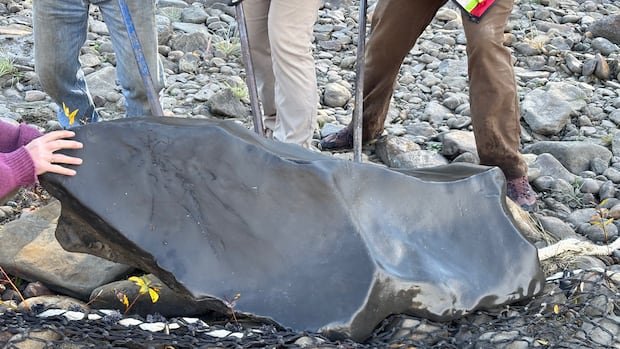

The fossilized skull of an ichthyosaur, a marine reptile, has been discovered in the Kiskatinaw River valley in British Columbia, approximately 52 kilometers south of Fort St. John. The skull was found by local resident Kevin Geist and his 11-year-old son Andreas during the summer, when they noticed a peculiar black rock on the river’s edge in the area known for its abundance of fossils.
Due to the prolonged drought in the region, the water levels in the Kiskatinaw River have decreased significantly, exposing more rocks along the shoreline. It was amidst these exposed rocks that the prehistoric skull was found. Geist highlighted that the dry conditions have led to more rocks being visible, making such discoveries possible.
Initially uncertain about the significance of the rock, Geist revisited the site this summer and shared images of the discovery with the Tumbler Ridge Museum after encouragement from his sister-in-law, Diana Hofmann. The museum expressed keen interest in the finding, confirming it as an ichthyosaur skull.
Unlike dinosaurs, ichthyosaurs were marine reptiles resembling a blend of dolphins and fish, perfectly adapted for life in water, including giving birth to their young in the ocean. The museum’s resident paleontologist, Eamon Drysdale, revealed that the ichthyosaur likely perished during the Triassic era. Surprisingly, the skull’s location in the Cretaceous-period river valley is unusual, indicating a curious geological journey.
The skull, encased in Triassic carbonate rock, is believed to have been transported by a glacier into the river valley following the formation of the Rocky Mountains. Drysdale emphasized the rich fossil diversity in the Peace region, spanning over 500 million years of Earth’s history, with various specimens from different epochs waiting to be unearthed.
The recovery of the ichthyosaur skull was a collaborative effort, underscoring the community’s involvement in paleontological discoveries in the region. Drysdale expressed excitement about the specimen’s potential insights into the ancient marine world, praising the Geist family’s contribution to the find.
The Peace region, renowned for its fossil wealth, has yielded numerous discoveries, including dinosaur bones, footprints, and other prehistoric remnants. The Tumbler Ridge area, a UNESCO World Heritage Site, showcases these findings through exhibits and trails, offering a glimpse into the region’s prehistoric past.