


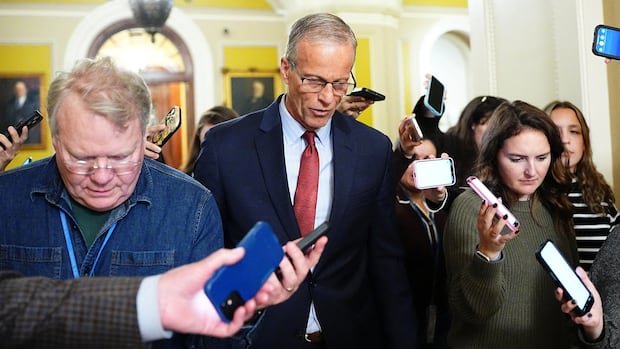

The US Senate has initiated steps to resolve the government shutdown by securing a compromise agreement without a guaranteed extension of health-care subsidies. This move by a group of moderate Democrats has caused division within their caucus, with some members expressing disappointment that the fight for continued subsidies was not prioritized.
In a preliminary vote, the Senate approved a motion 60-40 to progress with a compromise bill aimed at funding the government and scheduling a subsequent vote on extending Affordable Care Act tax credits set to expire on January 1. Final approval may face delays if Democrats raise objections and impede the process.
The agreement does not assure the extension of Affordable Care Act subsidies, a demand that Democrats have been advocating for nearly six weeks. Senate Minority Leader Chuck Schumer of New York and the majority of his Democratic colleagues voted against moving forward with the package. However, a breakthrough occurred when a trio of former governors, including New Hampshire Senators Jeanne Shaheen and Maggie Hassan, along with Independent Senator Angus King of Maine, agreed to advance three bipartisan spending bills and extend government funding until late January, contingent on a mid-December vote on extending health-care tax credits.
Noteworthy provisions of the agreement include reversing the mass layoffs of federal workers initiated by the Trump administration since the onset of the shutdown and ensuring back pay for affected federal employees. Senate Majority Leader John Thune endorsed the deal, emphasizing the urgency to act promptly amidst disruptions in air travel, risks to food aid programs, and financial strain on federal workers.
President Donald Trump, upon returning to the White House, refrained from confirming his support for the deal but indicated optimism about nearing an end to the shutdown. The agreement witnessed bipartisan support, with Democratic senators such as Tim Kaine of Virginia backing the proposal. Notably, the number of Democrats supporting the agreement fell short of expectations, with only a limited group aligning with moderate Democrats to secure the necessary votes.
The Senate vote encountered brief delays as some conservative Republican senators initially withheld their support but eventually voted in favor after discussions with party leaders. The ongoing standoff highlights the complex negotiations and differing stances within the Senate.
Despite the progress made by moderates, dissent among Democrats persists, with concerns raised about the adequacy of the agreement, particularly regarding health care provisions. House Democrats have also expressed skepticism, signaling potential challenges to finalizing a comprehensive resolution to the shutdown.
The evolving dynamics underscore the intricate process of navigating bipartisan consensus and addressing critical issues to achieve a sustainable resolution to the government shutdown.