


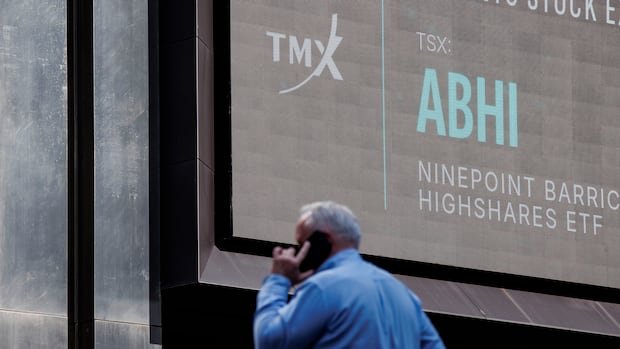

Canadian and U.S. stock markets experienced declines on Friday due to concerns regarding the potential impact of the U.S.-Iran conflict on interest rates. Dustin Reid, the vice president and chief strategist for fixed income at Mackenzie Investments, noted that markets were responding with risk-averse behavior in light of elevated energy prices and inflation risks. The anticipation of central bank rate hikes was influencing various asset classes, including equities.
The S&P/TSX composite index dropped by 537.57 points to reach 31,317.41. Meanwhile, in New York, the Dow Jones industrial average fell by 443.96 points to 45,577.47, the S&P 500 index decreased by 100.01 points to 6,506.48, and the Nasdaq composite saw a decline of 443.08 points to 21,647.61.
Traders displayed heightened concerns, leading them to unwind most of their expectations for a potential interest rate cut by the U.S. Federal Reserve this year. Some market participants even considered the possibility of rate hikes by the Fed as far out as 2026, a scenario previously deemed unlikely before the onset of the conflict.
The prospect of lower interest rates had previously been viewed as favorable for the economy and investment prices, aligning with the desires expressed by U.S. President Donald Trump. However, the current environment presents a dilemma as lower rates could exacerbate inflation. Investors are now skeptical about the ability of central banks globally, including the Federal Reserve and Bank of Canada, to implement rate cuts to support economic conditions. Notably, central banks in Europe, Japan, and the United Kingdom maintained their interest rates unchanged in the past week.
The price of the May crude oil contract surged by $2.68 to hit $98.23 per barrel. Brent crude oil prices fluctuated significantly, rising from approximately $70 per barrel pre-conflict to as high as $119.50 per barrel this week. The volatility in oil prices reflects the uncertainty surrounding the duration of the conflict and its potential impact on oil and gas production in the Persian Gulf region.
In the Canadian stock market, various sectors experienced negative performance, with basic materials exerting the most significant drag. Consumer non-cyclicals emerged as the sole sector showing positive movement. The Canadian dollar traded at 72.90 cents US, slightly up from 72.84 cents US the previous day, demonstrating resilience amidst market turbulence.
Overall, market analysts suggest that historical trends indicate a potential recovery in stock markets following geopolitical tensions, provided that oil prices do not remain elevated for an extended period.