


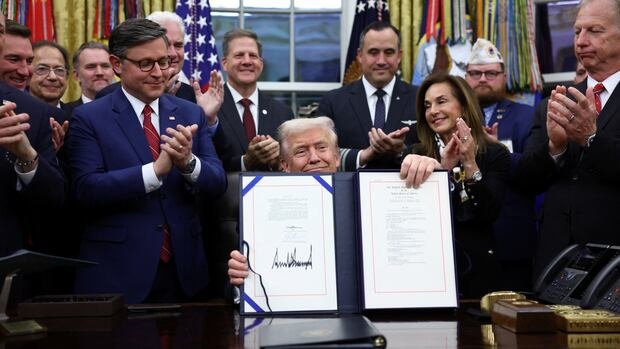

The U.S. House of Representatives approved a bill on Wednesday to bring an end to the nation’s lengthiest government shutdown, which President Donald Trump later signed. This development marks the conclusion of a significant 43-day funding gap that left federal employees without several paychecks, travelers stranded at airports, and individuals queuing at food banks to secure meals for their families.
House legislators returned to Washington, D.C., after an almost eight-week hiatus, with Republicans leveraging their slight majority to secure a 222-209 vote in favor of the bill. The Senate had previously passed the same measure.
President Trump’s endorsement signifies the conclusion of the second government shutdown under his tenure, a period that accentuated partisan rifts in Washington as his administration resorted to unprecedented measures, such as canceling projects and attempting to dismiss federal workers, to compel Democrats to yield on their demands.
Democrats advocated for an extension of an expiring enhanced tax credit that reduces healthcare coverage costs obtained through Affordable Care Act marketplaces. They opposed a short-term spending bill that omitted this priority. Republicans argued that this issue should be addressed separately at a later time.
The shutdown highlighted the deep-seated partisan divisions within Congress, evident during the debates on the House floor. Republicans accused Democrats of exploiting the shutdown-induced suffering to advance a policy dispute.
Despite the bill’s passage, Democratic House Leader Hakeem Jeffries emphasized that the fight for the subsidy extension was far from over. The legislation also addressed the reversal of federal worker dismissals during the shutdown, safeguarding them against further layoffs through January and ensuring their eventual payment post-shutdown.