


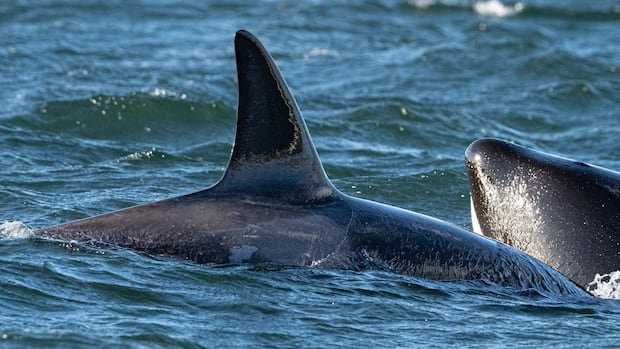

A trio of mysterious killer whales recently spotted in Vancouver Harbour has captivated residents and experts alike. These whales, believed to be from an Alaska population, have sparked intrigue as they are not typical residents of British Columbia waters, according to Fisheries and Oceans Canada (DFO).
DFO scientists are currently conducting a thorough assessment of these unique whales, aiming to gain insights into their behavior and origins. A team from Nanaimo, B.C., has been actively observing the whales as part of this assessment.
Jared Towers, the executive director of Bay Cetology, highlighted the rarity of these sightings, emphasizing that the whales do not belong to the familiar West Coast Transients but are genetically distinct with different DNA and vocalizations. He explained that each killer whale is distinct, akin to human individuals, and can be identified through unique physical features.
Notably, the whales bear scars believed to be from cookiecutter sharks, indicating they may be oceanic whales rather than coastal transient orcas commonly seen in Vancouver. Marine mammal researcher Josh McInnes pointed out that such marks are typically found on whales inhabiting open-ocean environments, making their presence in coastal waters an unusual occurrence.
While the exact reason for their presence in Vancouver remains a mystery, experts are cautious about jumping to conclusions regarding the whales’ population. Marine naturalist Aly Kohlman emphasized the need for more time and observation to determine the whales’ origins definitively.
Concerns have been raised about the whales’ extended stay in the busy harbour, with experts speculating that they may feel “psychologically trapped” in the high-traffic area. The noisy and congested waterway, filled with various vessels, could be causing distress to the unfamiliar whales.
As researchers continue to monitor the situation, they encourage the public to share any whale sightings for further identification and tracking. However, it is crucial to maintain a safe distance from the animals as per Canada’s Marine Mammal Regulations, which mandate a 400-meter buffer zone around killer whales in southern B.C. coastal waters.