


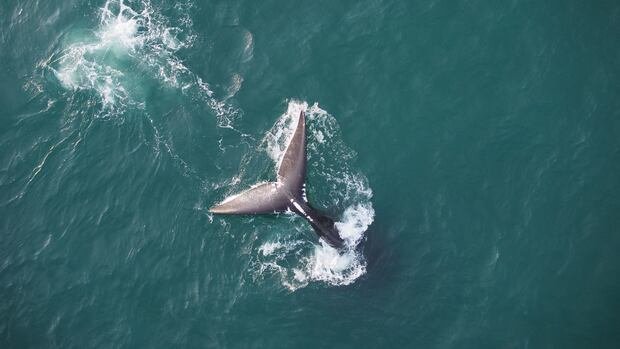

The United States is considering revisions to regulations aimed at safeguarding the North Atlantic right whale, a critically endangered species found along the East Coast. The National Oceanic and Atmospheric Administration (NOAA) has highlighted the potential of modern technology to reduce ship strikes on whales while meeting industry requirements. According to Neil Jacobs, the NOAA administrator, the proposed changes align with the President’s strategy of embracing innovative technologies, supporting American businesses, and streamlining regulations. Seeking feedback to minimize unnecessary burdens stemming from speed restrictions imposed on larger vessels in 2008, the agency is contemplating modifications.
Despite technological advancements like satellites, thermal imaging, and surveys conducted by drones or boats aiding in whale detection, experts caution that these tools alone are inadequate in preventing collisions due to their inability to predict whale movements accurately. While infrared cameras mounted on ships have shown promise in spotting whales at a distance, their effectiveness is still in the experimental phase and limited due to a narrow field of vision. Suggestions to alter speed limits for ships have been met with criticism from conservationists like Moira Brown, who considers such changes a setback in whale conservation efforts.
Additionally, a 2020 NOAA report assessed the impact of speed limit regulations, which mandate vessels measuring 20 meters or longer to reduce speed to 10 knots in specific areas and times. The report indicated a decrease in whale mortalities since the regulations’ implementation but recommended strengthening enforcement, extending coverage to smaller vessels, and adjusting speed limits further. Captain Bob Peacock, a veteran ship pilot in Maine, emphasizes the importance of adhering to speed limits and effective communication to avoid collisions, highlighting the success achieved through collaborative efforts.
Acknowledging the challenges posed by limited technology in whale collision prevention, Peacock underscores the significance of human observation and cooperation with local experts familiar with the area to safeguard whales. The North Atlantic right whale population, dwindling since 2010, faces threats primarily from entanglement in fishing gear and vessel strikes, with documented collisions causing fatalities. With the whale population estimated to be less than 400, the urgency to enhance protective measures is paramount.