



A federal initiative aiding entities engaged in marine and beach cleanups is making a comeback, albeit with reduced funding compared to previous years. The Department of Fisheries and Oceans disclosed to CBC News that the Ghost Gear Fund revival will amount to $15 million over a three-year span, without specifying the fund’s exact launch date or any alterations to application criteria.
Expressing optimism about the fund’s return, Angela Riley, the founder of Scotian Shores, highlighted the significance of the financial support for her organization. However, she also noted that the allocated $15 million over three years might appear insufficient when considering the broader scope of the issue.
Ghost gear, referring to lost, abandoned, or discarded fishing equipment, contributes significantly to plastic pollution in the oceans, particularly in regions like Atlantic Canada with a deep-rooted fishing industry.
The original iteration of the Ghost Gear Fund, initiated in 2020, disbursed $58.3 million across 134 retrieval projects in Canada and globally from 2020 to 2024. Notably, no funding was provided in 2025, prompting concerns about resource availability for cleanup initiatives.
Following the discontinuation of Nova Scotia’s Marine Debris Clean-up Program earlier this year, organizations like Scotian Shores are reassured by the federal program’s continuation, which assists in covering expenses to maintain the cleanliness of coastal waters in Nova Scotia.
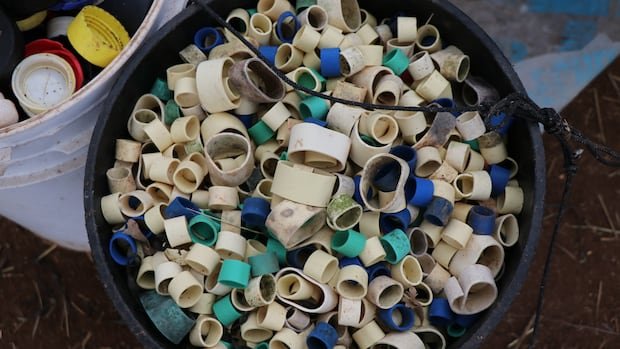
While the exact quantity of ghost gear in provincial waters remains challenging to estimate, numerous lobster traps, bands, and ropes are retrieved annually through cleanup efforts in Nova Scotia.
Both Scotian Shores and the Fundy North Fishermen’s Association, based in St. George, New Brunswick, have been recipients of funding from the Ghost Gear Fund. The financial support enables these organizations to conduct more in-water cleanup trips, underscoring the critical role of such funding in environmental preservation efforts.
In-water cleanups involve considerable expenses, with fishermen incurring costs for daily operations, fuel, and crew time. The rising fuel prices further strain their financial sustainability, as each cleanup operation can span 12 to 14 hours a day, potentially impacting their livelihoods if their vessels sustain damage during the process.
Furthermore, the responsible disposal of retrieved materials poses a significant challenge, with funding often quickly depleting due to recycling endeavors, as highlighted by Riley.
Looking ahead, the Department of Fisheries and Oceans is developing a comprehensive “Ghost Gear Action Plan” set to be finalized in 2027, aiming to enhance strategies for combating marine pollution and promoting sustainable cleanup practices.