


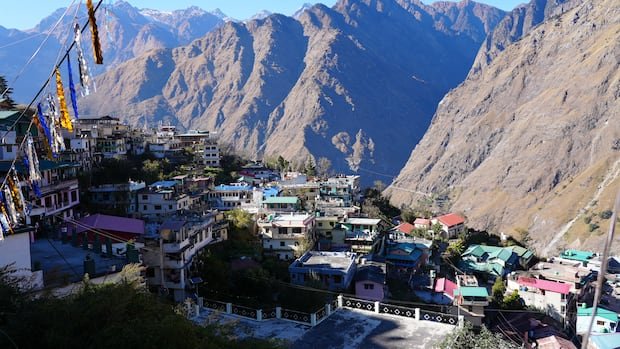

In the dead of night, Abhishek Nautiyal and his family received a urgent call from a family acquaintance instructing them to vacate their residence in Joshimath, a small mountain town in Uttarakhand, India. The reason was a looming disaster — the town was experiencing sinking due to water saturation, resulting in deep cracks in over 800 homes, including Nautiyal’s. Forced to move to a temporary shelter for six months from early January 2023, the ordeal took a toll on Nautiyal, affecting his academic performance.
A subsequent study revealed rapid land subsidence in Joshimath during late 2022 and early 2023, with significant drops recorded. The town witnessed fissures in streets, sidewalks, homes, temples, and hotels, causing structural damages and safety concerns. This phenomenon, though not new, has been distressing for many residents in the severely impacted neighborhoods of Joshimath, positioned at an elevation of 1,874 meters in the Indian Himalayas.
The town’s precarious situation can be attributed to its foundation on unstable soil formed by a receding glacier and ancient landslides, exacerbating the sinking due to increased urbanization. Experts have long cautioned against extensive construction projects in the earthquake-prone region with inadequate drainage systems, which further heighten the risk of collapses.
The escalating impact of climate change on the Himalayan region, with rising temperatures accelerating glacier retreat, poses additional threats. The rapid melting of Himalayan glaciers has put many mountain villages at risk of glacial lake outburst floods, amplifying the vulnerability of settlements like Joshimath.
Local residents, like Nautiyal and his family, continue to reside in marked unsafe homes, defying relocation orders due to inadequate compensation. With a looming risk of further sinking or drastic drops akin to the 2023 incident, nearly 40% of Joshimath’s population may require resettlement.
Construction activities, including the Tapovan Vishnugad hydropower project, have been blamed for exacerbating the town’s sinking predicament. Despite warnings dating back to the 1970s advising against heavy construction in the area, ongoing large-scale projects persist, contributing to the environmental degradation and endangering residents.
While acknowledging the necessity of infrastructure development to accommodate pilgrims visiting sacred sites like the Nanda Devi peak and Badrinath Temple, activists emphasize the need for responsible construction practices and environmental safeguards to prevent further disasters.
Residents like Nautiyal and Sundriyal, residing in homes marked with red Xs denoting structural risks, grapple with uncertainty and fear. Despite the challenges, they remain resilient, hoping for a better future while living on the edge of a sinking town.