


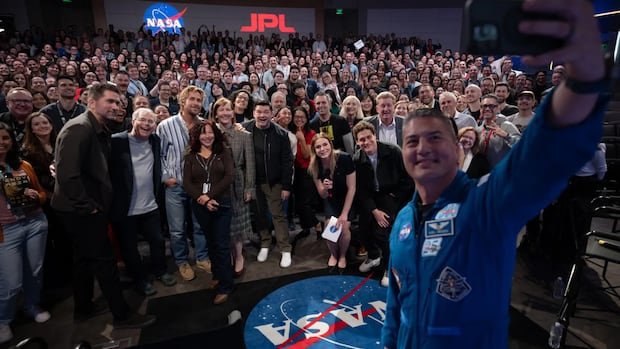

Longtime buddies and equally long-term collaborators Phil Lord and Chris Miller applied their familiar approach to “Project Hail Mary,” drawing from their past works like “21 Jump Street” and “The Lego Movie” up to the more recent “Spider-Verse” series.
Discussing their film adaptation of Andy Weir’s sci-fi novel with CBC’s “Q,” Lord emphasized, “We often say we want this movie to help people imagine goodness. Because it’s not hard to imagine all of the crummy things in the world, you know? And sometimes we need a reminder.”
In a narrative centered on a solitary astronaut dispatched into deep space to unravel a mystery and safeguard the planet, the prevalent themes of goodness and hope resonated strongly. This resonates with a long line of space-themed films released concurrently with actual space exploration endeavors or during periods of heightened public interest in space.
Miller reflected on the collaborative effort behind “Project Hail Mary,” highlighting the unity and determination required for seemingly impossible tasks, mirroring the subplot of individuals worldwide coming together to achieve a common goal. The film’s success post a robust box-office opening defied expectations for a non-franchise, original production.
The film’s broad appeal as a “four-quadrant” movie, uniting diverse demographics in shared excitement and joy, has drawn audiences back to theaters, offering a refreshing break from the prevailing gloom. Film critic Rachel Ho praised the film for providing much-needed positivity amid current global challenges.
The film’s optimistic narrative mirrors real-life space exploration milestones like the Artemis II mission, showcasing humanity’s capacity for unity and achievement in the face of adversity. Former Canadian astronaut Robert Thirsk, who attended the Artemis II launch, emphasized the power of space-themed films in inspiring future generations and fostering a spirit of innovation and exploration.
Collaboration between NASA and Hollywood has been instrumental in shaping public perceptions of space exploration, with films like “Project Hail Mary” contributing to the collective wonder and enthusiasm for space endeavors. NASA’s involvement in cinematic productions aligns with its mission to inspire and educate the public about space exploration, leveraging the storytelling power of movies to engage wider audiences.
The enduring impact of space-themed films on individuals like Thirsk underscores the potential for cinematic narratives to inspire and motivate individuals towards ambitious goals. As the Artemis program aims to propel humanity back to the moon and beyond, the intersection of science and storytelling continues to captivate audiences and fuel aspirations for future space exploration endeavors.