


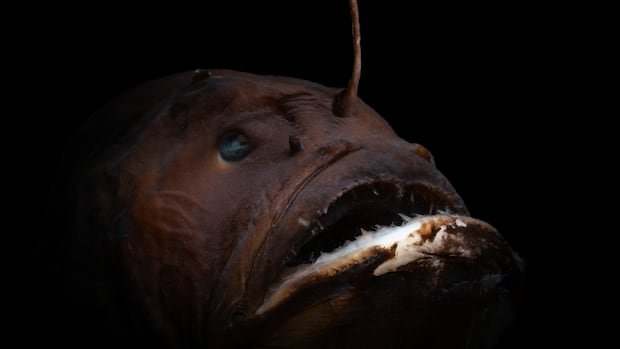

The distinctive forehead extension of female anglerfish, known as a lure, has been traditionally recognized by scientists as a tool to attract unsuspecting prey. However, a recent study suggests that this lure may also serve as a signal for male anglerfish seeking companionship in the deep sea. Biologist Alex Maile, the lead author of the study, describes anglerfish as a mix of beauty and terror, akin to “Beauty and the Beast.”
Published in the journal Ichthyology and Herpetology last month, the research is based on a genetic analysis of over 100 preserved anglerfish species, indicating how various types of lures may have evolved to enhance reproductive success.
Marine biologist Milton Love, uninvolved in the study, finds the dual-purpose lure theory thought-provoking, challenging established beliefs and highlighting the importance of innovative perspectives in scientific research.
Anglerfish, contrary to the popular depiction in movies like “Finding Nemo,” exhibit a wide range of diversity with hundreds of species inhabiting various oceanic regions. The lures found on female anglerfish, an evolutionary adaptation of the dorsal fin spine, come in different forms and functions, including emitting chemicals or bioluminescent light.
Maile, a PhD candidate at the University of Kansas, delved into the research out of curiosity about the vast variations in anglerfish lures, utilizing DNA analysis, fossil evidence, and computer modeling to understand how these adaptations correlate with different habitats and behaviors.
The study reveals that the evolution of anglerfish lures dates back around 72 million years, with the emergence of bioluminescent lures in deep-sea species between 23 and 34 million years ago. This development led to increased diversity among anglerfish, suggesting that natural selection, particularly driven by bioluminescence, aided male anglerfish in locating females in the dark depths.
Male anglerfish, significantly smaller than females and lacking their own lures, rely on sensory cues like bioluminescence and pheromones to seek out potential mates. Once mature, males cease feeding and focus on finding a female for reproduction within a limited timeframe.
Bioluminescence as a mating strategy is not unique to anglerfish, with other deep-sea creatures like lanternfish and dragonfish employing similar tactics. For male dragonfish, large eyes evolved to better detect glowing females, similar to the male anglerfish’s reliance on bioluminescent cues.
While the mating ritual of anglerfish may seem gruesome, involving the male permanently attaching to the female, Maile suggests that it fulfills their biological imperative. Love echoes this sentiment, emphasizing that from a biological perspective, this symbiotic union is the male anglerfish’s ultimate purpose in life.