


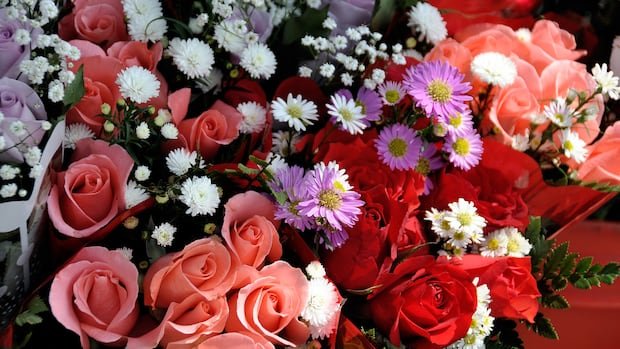


Every Mother’s Day, the tradition of gifting flowers to show appreciation for moms continues, emphasizing the deeper meaning behind these floral gestures.
Beyond their visual appeal and aromatic allure, flowers serve as a means of expressing emotions like love, gratitude, and joy, or simply to bring brightness to someone’s day.
In a recent study by Statistics Canada, it was revealed that over 425 million flowers were harvested in greenhouses nationwide in 2025.
Biologist David George Haskell highlights that while we often admire flowers for their appearance and scent, their evolutionary journey is a fascinating tale that is often overlooked.
Flowering plants made their debut approximately 130 million years ago and rapidly propagated across the globe, now constituting about 90% of all plant species on the planet.
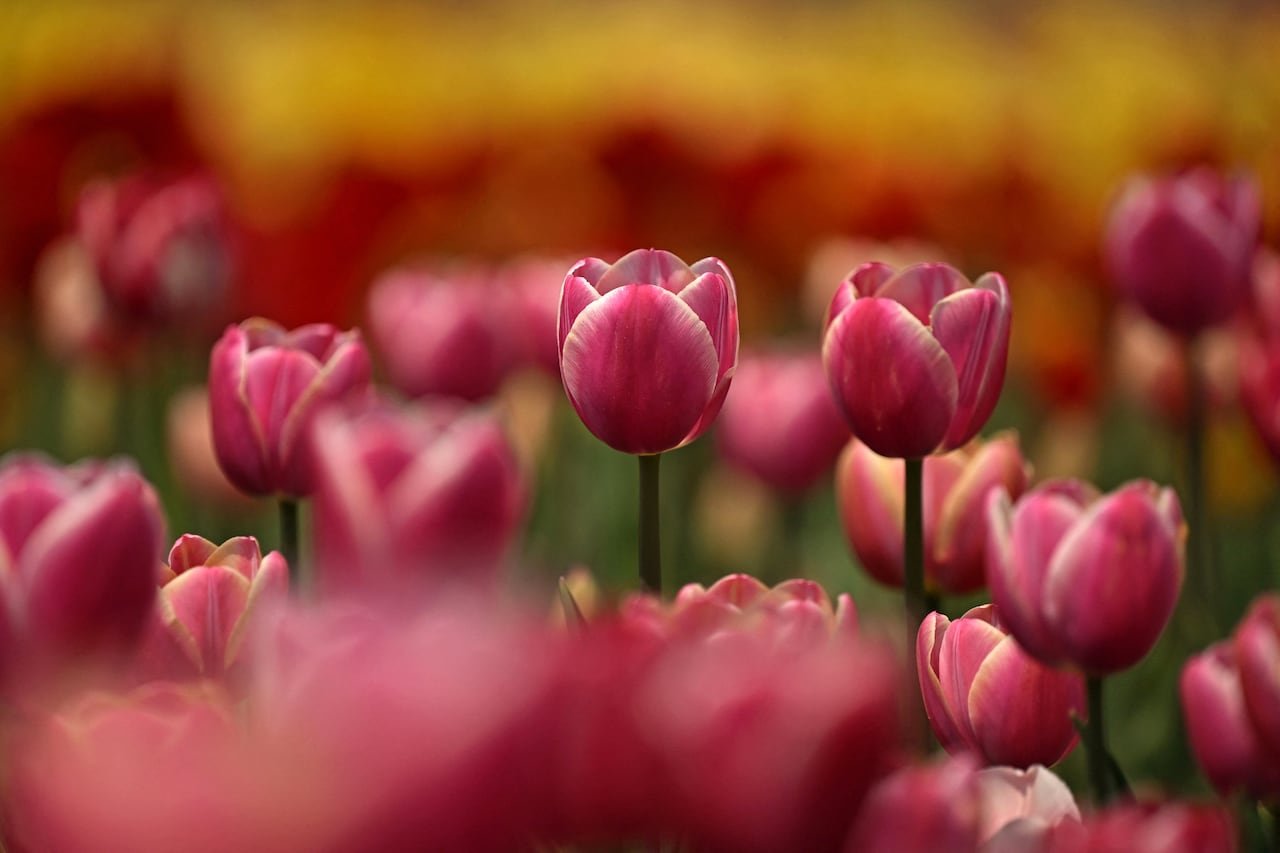
A visual of tulips blooming at the Indira Gandhi Memorial Tulip Garden in Srinagar, India. (Tauseef Mustafa/AFP via Getty Images)
A significant evolutionary advancement, according to Haskell, was the fusion of male and female reproductive parts within a single flower.
Previously, these functions were often segregated among various plant components or even different plants altogether before the emergence of flowers.
Haskell explains that this integration allows visiting insects to efficiently transfer pollen, facilitating reproduction.
Flowers evolved to attract insects and other pollinators by showcasing vibrant petals and fragrant scents, forming a mutually beneficial relationship, as per Haskell.
While natural forces like wind can aid in pollen transfer, insect pollination proves to be significantly more effective due to its precise particle transportation.
The ingenious adaptation of flowers lies in