




Remoras, commonly known as suckerfish, are not always the most considerate companions during their oceanic journeys.
These small fish hitch rides on larger marine creatures such as sharks, whales, and manta rays, feeding on parasites while getting a free lift.
New research suggests that having a remora attached to them may pose discomfort for manta rays.
Marine researcher Emily Yeager from the University of Miami discussed the phenomenon with Nil Kӧksal on As It Happens, highlighting the potential discomfort caused to the rays.
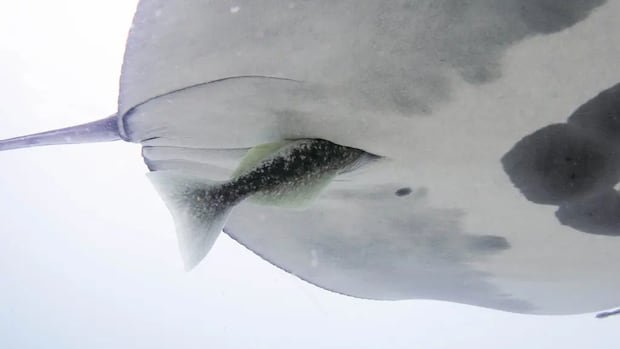
Yeager, the lead author of a recent study on this behavior, coined the term ‘cloacal diving’ for the act where remoras enter the host’s cloaca, a vital orifice for reproduction and waste elimination.
While cloacal diving has been observed between remoras and whale sharks, the interaction with manta rays is a novel finding.
The study documented seven instances of this behavior over 15 years, suggesting it may occur more frequently than reported.
According to Yeager, the behavior could be a response to fear in remoras, as seen in a video where a remora dives into a manta ray’s cloaca after being startled.
Professor Brooke Flammang, an expert on remoras, explained that the behavior might be linked to the fish seeking a meal, known as coprophagy, or “eating poop.”
Flammang noted that remoras are typically not skittish around divers and may act fast to secure food resources.
Regarding the impact on manta rays, Yeager expressed concerns about potential harm caused by remoras’ actions, emphasizing the sensitivity of the cloaca and its importance for reproduction and waste elimination.
If cloacal diving proves harmful to manta rays, it challenges the traditional categorization of the relationship between the two species as either symbiotic or commensal.
Yeager highlighted the complexity of such interactions, emphasizing that relationships in nature may not fit into rigid categories but rather exist on a spectrum.
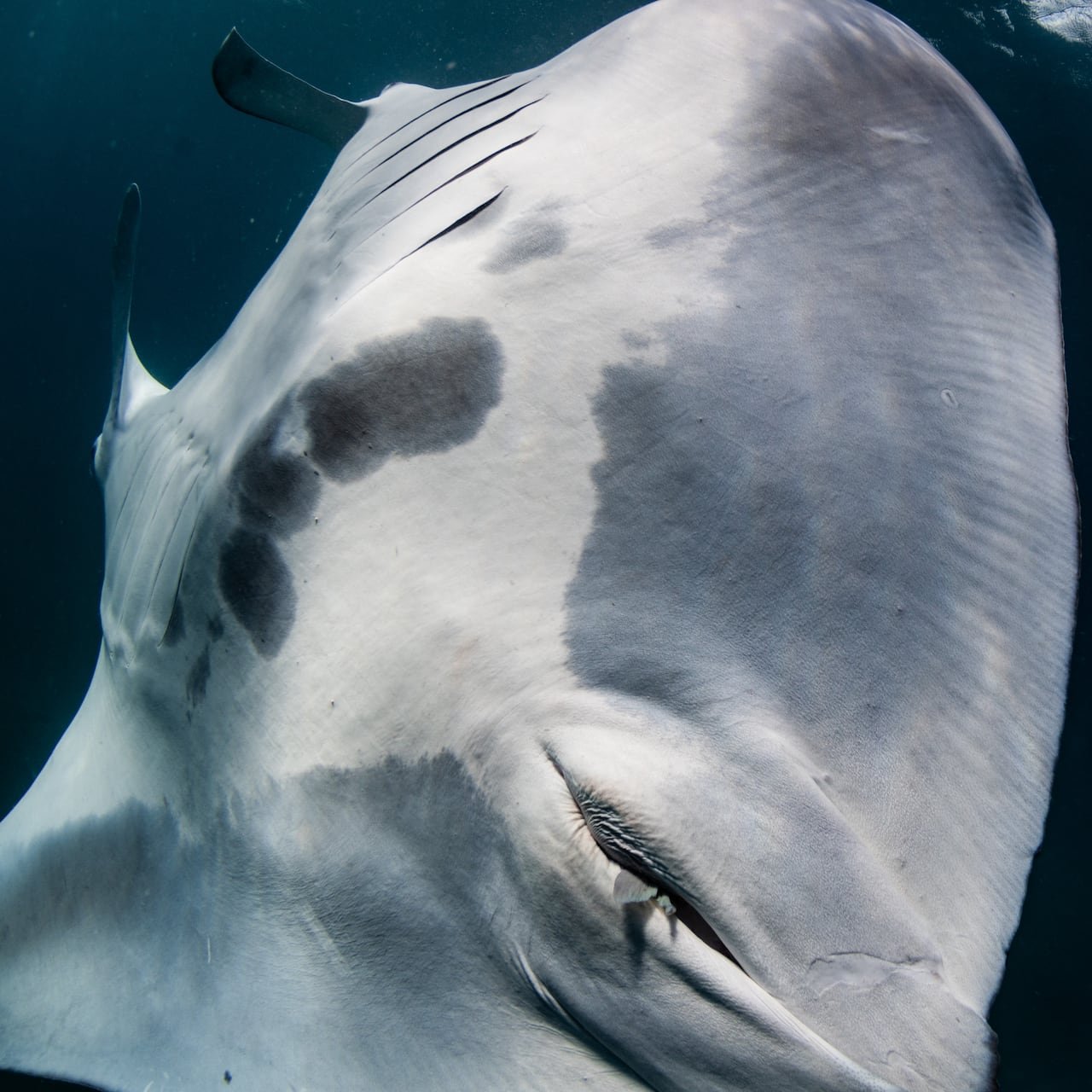
The reason for remoras diving into the cloaca and the manta ray’s response remain unclear. (Jessica Pate/Marine Megafauna Foundation)
<a href="https://www.cbc