


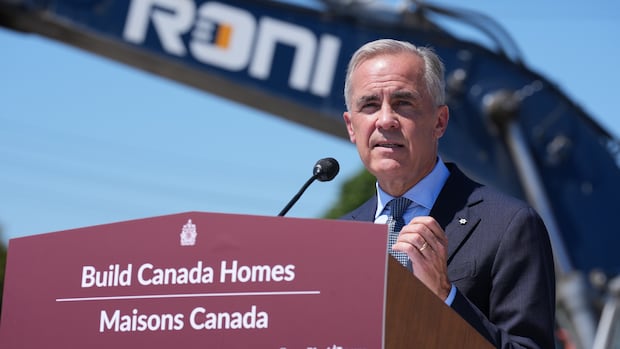

Prime Minister Mark Carney announced that Canadian trade negotiators are prioritizing discussions with their U.S. counterparts regarding “all strategic sectors,” including the automotive industry, as the deadline for U.S. President Donald Trump’s upcoming tariffs approaches in just a few weeks.
While making a housing-related announcement in Toronto on Wednesday, Carney expressed his commitment to ensuring that “all 232s are addressed.”
Section 232 refers to the legislation utilized by Trump to implement the majority of tariffs affecting industries such as aluminum, steel, and auto components. This law empowers the U.S. president to impose tariffs to safeguard American industries based on a threat to national security identified by a Commerce Department investigation.
Canada’s Trade Minister Dominic LeBlanc and chief trade negotiator Janice Charette are currently in Washington for additional meetings this week.
Carney mentioned that he has been “very involved” in these discussions.
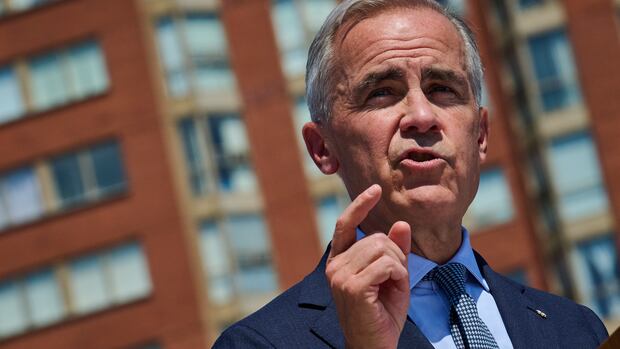
When asked by a reporter about the likelihood of preventing U.S. President Donald Trump’s 50 percent tariffs, which are set to take effect on Aug. 19, Prime Minister Mark Carney replied, ‘we’ll see.’
The Globe and Mail reported, citing various sources, that the two countries are considering steel and aluminum export quotas as a method to reduce U.S. tariffs on these industries.
However, two government sources informed CBC News on Wednesday that this does not accurately reflect the current negotiations. These sources requested anonymity due to the sensitive nature of the discussions.
On Tuesday, LeBlanc and Charette met with Jay Timmons, the CEO of the National Association of Manufacturers. Additionally, LeBlanc met on Wednesday morning with North Dakota Republican Senator Kevin Cramer and Tennessee Republican Senator Bill Hagerty.
It is still uncertain whether LeBlanc will have another meeting with his U.S. counterpart, Trade Representative Jamieson Greer. They had a meeting last week in Washington, which LeBlanc described as “comprehensive.”
“We have time, and we are engaged in meaningful negotiations on several issues,” Carney stated.
“We have been explicit in our request for all 232s to be addressed. All strategic sectors must be included.”
-
Canada-U.S. trade minister back in Washington as countries ‘intensify’ trade talks
-
Trump’s trade rep defends new tariffs on Canada
The prime minister’s remarks come as the Aug. 19 deadline approaches, when the U.S. plans to implement 50 percent tariffs on approximately five percent of Canadian exports to the U.S. The goods affected include items ranging from alcohol to hockey sticks and cement.
Greer has previously defended these potential tariffs as part of a larger strategy to address the U.S. trade deficit.
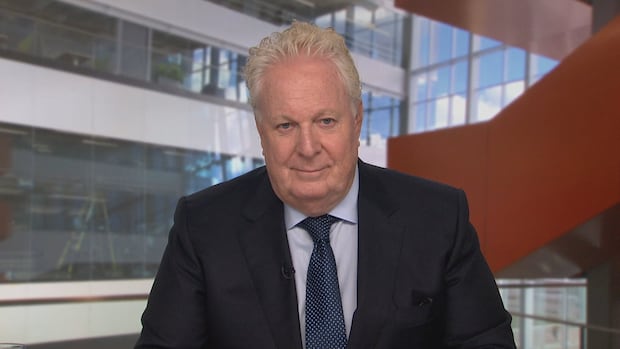
Prime Minister Mark Carney remarked on Wednesday that now is not the appropriate time to alter the approach to tariff negotiations. His statements come amid Trade Minister Dominic LeBlanc’s return to Washington to continue discussions with various American politicians and stakeholders. Power & Politics hears from Jean Charest, a member of the Advisory Committee on Canada-U.S. Economic Relations.
Greer described the country’s trade deficit, which reached $1.2 trillion US in 2025, as a “national emergency” during a U.S. Senate finance committee meeting last month.
Carney described Canada’s approach to the potential tariffs as “the moment to get tougher,” indicating that this could occur in the days leading up to the deadline.
Last month, Carney mentioned he had a conversation with Trump and both leaders concurred on the necessity of intensifying trade discussions.
Former Quebec premier Jean Charest, who is part of Carney’s Advisory Committee on Canada–U.S. Economic Relations, provided insights into that phone call during an interview with CBC’s Power and Politics, stating it led to greater involvement from the U.S. administration in the current round of negotiations.
“It’s promising that the entire administration is more engaged in these talks than they were prior to that phone call,” he told guest host Katie Simpson.
However, Carney has not dismissed the possibility of retaliatory measures if the additional tariffs are enacted. Nevertheless, he stated last week that he does not see the “value” in leveraging Canadian energy exports as a negotiation tool.
Canada has already addressed several trade issues raised by the Trump administration, such as abandoning a proposed digital services tax and rolling back a Canadian content levy on streaming services—actions that seem to have had little impact on U.S. relations.
Greer acknowledged last month that Canada had eliminated two significant trade irritants but added a caveat.
“I’m pleased they did that, but they don’t receive credit for reversing something negative,” Greer commented.