


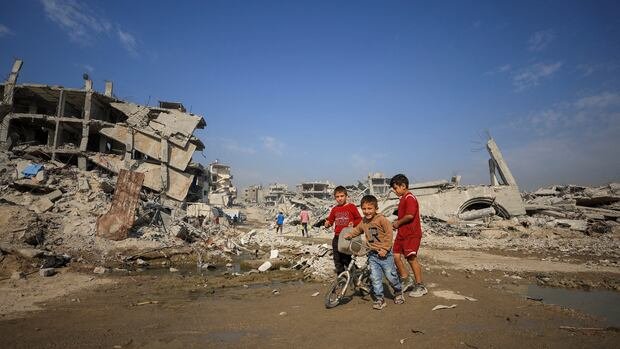

Thousands of aid packages in Jordan, Egypt, and Israel are on hold, according to humanitarian organizations, expressing concerns over limited aid reaching Gaza almost a month after a ceasefire pact between Hamas and Israel. With the impending cold weather, many people in Gaza are still residing in deteriorating makeshift shelters, ill-equipped to withstand the harsh conditions following Israel’s destructive two-year assault on the densely populated area.
Angelita Caredda, the Middle East and North Africa Regional Director for the Norwegian Refugee Council (NRC), emphasized the urgent need to shield families from winter rains and cold. Caredda highlighted the inadequate influx of shelter materials into Gaza, stressing the critical need for rapid and unobstructed access to the region.
The NRC, leading a coalition of agencies addressing the shelter deficit in Gaza, revealed that Israeli authorities had declined 23 requests from nine aid organizations to bring in essential shelter supplies, including tents, bedding, kitchen sets, and blankets. Caredda emphasized the life-threatening consequences of delays in providing adequate shelter, stating that no family should endure the winter exposed to the elements.
The NRC raised concerns about millions of shelter and non-food items stuck in neighboring countries awaiting approvals, leaving approximately 1.5 million people vulnerable to worsening conditions in Gaza. Despite the ceasefire agreement allowing aid trucks into Gaza and food distribution to families, challenges persist due to Israeli restrictions, hindering the timely delivery of supplies.
The World Food Program (WFP) reported that only half the required food supplies were entering Gaza, while a Palestinian agency consortium collaborating with the UN cited that merely 25 to 30 percent of anticipated aid had been delivered. Israel maintained its compliance with the ceasefire terms, blaming Hamas for any food scarcity and alleging the misappropriation of food aid by the group.
Improvements have been noted since the ceasefire, with increased aid flow into Gaza, leading to enhanced access to food for half of the families, especially in the southern region. However, a significant disparity persists between southern and northern Gaza in terms of living conditions and access to resources.
Abeer Etefa, a senior spokesperson for WFP, emphasized the urgent need for comprehensive access and swift action in addressing the prevailing challenges, particularly with the approaching winter months and persistent hunger issues. The agency has distributed a portion of the required food assistance but highlighted the deficiency in a diverse range of food items essential for averting malnutrition.
Furthermore, the lack of fuel, including cooking gas, continues to impede nutrition efforts, with a majority of Gazans resorting to burning waste for cooking, posing additional health hazards. The conflict that erupted in October 2023 has resulted in significant casualties, with ongoing challenges in delivering aid and addressing critical needs in the region.
Health officials reported the repatriation of additional Palestinian bodies from Israel as part of the ceasefire agreements, although allegations of violations persisted. The situation in Gaza remains complex, with various issues hindering the delivery of aid and essential resources to the population in need.