


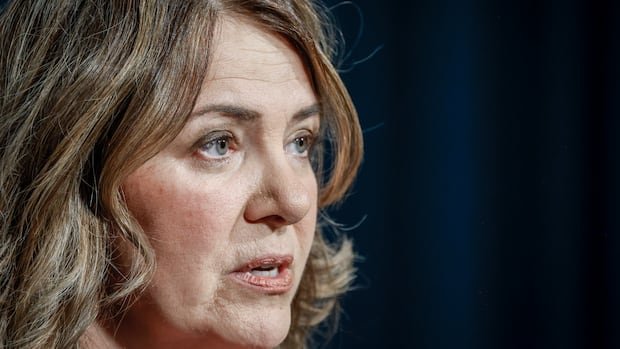

Alberta Premier Danielle Smith reaffirmed her province’s dedication to achieving a carbon-neutral economy by 2050 during a parliamentary committee meeting on Thursday, where MPs are reviewing Canada’s emissions reduction strategy for the upcoming decade.
Smith, appearing virtually, engaged in heated exchanges with Bloc Quebecois MP Patrick Bonin, who repeatedly pressed her on her stance regarding climate change. Smith hinted that Bonin, being from Quebec, might not fully comprehend the significance of one of Canada’s major industries.
Despite Bonin’s persistent questions about her views on climate change and human activity’s role in causing it, Smith initially evaded direct answers by shifting the conversation to forest management practices and Alberta’s emission reduction plan for 2050. Their dialogue became increasingly contentious, prompting Liberal chair Angelo Iacono to intervene and restore order.
Eventually, Bonin managed to get a clear response from Smith when he asked her to confirm whether she believes in global warming, to which she responded with a “yes.” Smith acknowledged that human activities contribute to climate change but refrained from stating whether it is the primary driver, citing her lack of scientific expertise.
Smith later challenged Bonin’s understanding of Alberta’s plan to double oil and gas production and its potential impact on achieving the 2050 net-zero target, implying a knowledge gap regarding the sector in Quebec.
Canada has committed to reducing emissions by 40 to 45 percent below 2005 levels by 2030, with recent indications suggesting a shift towards a long-term net-zero goal by 2050. Prime Minister Mark Carney announced that Canada would unveil a new climate competitiveness strategy alongside the government’s first budget on Nov. 4, emphasizing a results-driven approach prioritizing the economy over emissions targets.
During the committee hearing, Smith cautioned about energy investment leaving Canada for the United States due to regulatory restrictions, highlighting concerns over proposed emissions caps, tanker bans, and clean electricity regulations. She noted significant capital investments shifting to the U.S. in recent months, urging Ottawa to reconsider these policies that have drawn criticism from the oil and gas sector and federal Conservatives.
At a Canada 2020 conference in Ottawa, Trevor Ebl of TC Energy echoed Smith’s concerns, emphasizing the need for regulatory certainty and competitive returns to attract investments. Ebl compared the completion timelines of TC’s projects in Canada and Mexico, underscoring the efficiency differences in project approval and construction processes between the two countries.
The Building Canada Act, enacted in June by the Carney government, aims to address regulatory hurdles through expedited approval processes for projects deemed in the national interest. While welcomed by some, including Ebl, critics argue for broader application to accelerate energy project developments and instill investor confidence.
Conservative MPs support streamlining regulations to facilitate project progress, expressing reservations about temporary solutions that may not provide enduring certainty for investors. Stubbs, an Alberta MP, contended that the government should focus on removing barriers to project advancement permanently.
Ebl advocated for extending the principles of the Building Canada Act to a wider range of projects to expedite approvals and construction within the energy sector, fostering a more conducive environment for energy investments.