


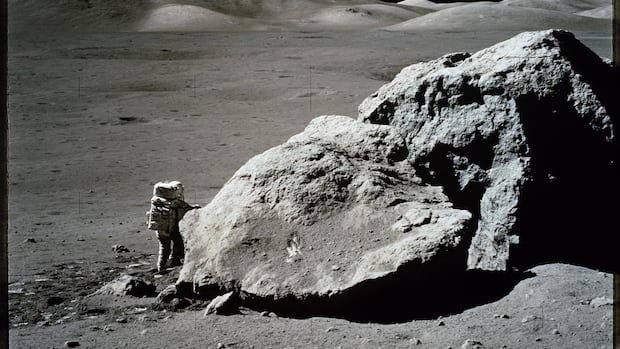

On July 20, 1969, the global audience held its breath as two American astronauts – Neil Armstrong and Buzz Aldrin – smoothly maneuvered on the moon’s surface, while Michael Collins observed from the command module overhead. This historic event was anticipated to mark the dawn of the space age, envisioning humans breaking free from Earth’s confines and venturing into space.
Despite subsequent missions, including the renowned Apollo 13 that encountered an accident preventing a lunar landing, humanity’s aspirations for the moon were halted after Apollo 17 in December 1972. Various reasons have been cited for this conclusion, ranging from the costly Vietnam War, accomplishing the goal of beating the Soviet Union to the moon, to declining public interest. Consequently, over five decades have passed without human presence near the moon.
Now, NASA’s ambitious Artemis program aims to revive lunar exploration, planning to return humans to the moon’s surface within the coming years. The program’s primary objectives include advancing scientific knowledge and engineering capabilities by undertaking unprecedented challenges.
The upcoming Artemis II mission, set to launch in early February, will not touch down on the moon’s surface but will orbit around the moon. This mission will entail Canadian Space Agency’s Jeremy Hansen, alongside NASA astronauts Reid Wiseman, Victor Glover, and Christina Koch, undertaking a 10-day voyage to surpass previous human space travel records. The mission aims to test critical equipment and conduct vital experiments to support the subsequent Artemis III crew.
Scheduled for 2028, Artemis III will witness astronauts landing on the moon’s south pole, an unexplored region that holds significant scientific potential. Notably, technological advancements in lunar exploration are not exclusive to the Artemis program, as countries like China and India are also pursuing lunar missions with the aim of landing humans on the moon by 2030 and 2040, respectively.
The renewed interest in lunar exploration extends beyond mere visits, focusing on establishing a sustainable presence on the moon. Several private enterprises are investing in lunar endeavors, foreseeing long-term opportunities for resource exploitation and economic growth. While some may question the allocation of resources to space exploration, space agencies and private entities view it as a strategic investment with potential long-term benefits.
Apart from scientific discoveries, lunar missions have catalyzed technological innovations with practical applications on Earth, such as advancements in computer technology, medical research, and everyday consumer products. Additionally, technology derived from space missions has led to breakthroughs in areas like food safety and healthcare, showcasing the broader societal benefits of space exploration.
The emerging lunar economy has spurred government support for commercial ventures, with companies exploring opportunities in lunar mining and resource extraction. Innovations like low-enriched uranium nuclear reactors for lunar applications and the extraction of water and helium-3 from the moon are paving the way for a new space economy, creating employment opportunities and driving technological advancements.
As humanity embarks on this new chapter of lunar exploration, the outcome remains uncertain. While skeptics question the long-term viability of lunar missions, advocates like Ram Jakhu emphasize the transformative potential of space exploration and artificial intelligence in shaping the future of humanity. The journey back to the moon symbolizes a pivotal moment in human history, offering endless possibilities for scientific discovery, economic development, and technological progress.