


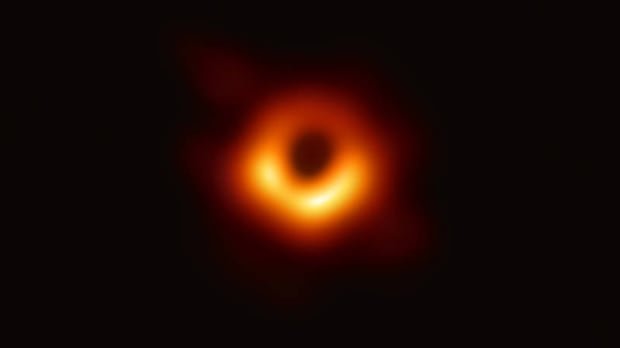

A group of astronomers is working on capturing the initial video footage of a black hole, aiming to shed light on the behavior of these enigmatic cosmic entities. Unlike the common depiction of black holes as cosmic voids or destructive forces, astrophysicist Sera Markoff emphasized that they are more nuanced and intriguing than popular media suggests.
The team’s endeavor builds upon the groundbreaking 2019 release of the first-ever image of a black hole located at the core of the Messier 87 (M87) galaxy, approximately 50 million light-years away from Earth. This achievement was made possible through the collaborative efforts of the Event Horizon Telescope (EHT), a network of eight radio telescopes spanning locations from Antarctica to Spain and Chile.
Markoff, a prominent figure in the field of astronomy at the University of Cambridge, highlighted the EHT’s current focus on monitoring the motion of the massive black hole within M87. By incorporating additional telescopes into the observation process, the team aims to capture more frequent images, enabling a dynamic portrayal of the black hole’s movement over time.
Vincent Fish, an integral part of the EHT operations team, emphasized the unique characteristics of the M87 black hole, which undergoes gradual changes over extended periods, facilitating the creation of a compelling time-lapse visualization. In contrast, another candidate for observation, Sagittarius A*, located at the center of the Milky Way, exhibits rapid fluctuations that pose challenges for detailed study.
The extensive data collected by the telescopes will undergo meticulous processing before researchers can delve into the intricacies of black hole physics. Markoff expressed optimism that the forthcoming video footage could provide valuable insights into fundamental questions surrounding black hole dynamics and their impact on the broader cosmic environment.
The study of black holes offers a glimpse into extreme physical phenomena that remain beyond the reach of terrestrial laboratories. Markoff underscored the importance of unraveling mysteries such as the rotational dynamics of black holes, their feeding mechanisms, and the intricate interplay between inward accretion and outward plasma emissions.
Moreover, the influence of black holes extends far beyond their immediate vicinity, with phenomena like galactic feedback shaping the evolution of galaxies by regulating star formation. By studying black holes, astronomers aim to gain a deeper understanding of the universe’s origins and evolution, recognizing the pivotal role these enigmatic entities have played in shaping cosmic history.