



A Canadian start-up, Aurmada, is among the many companies and designers utilizing artificial intelligence (AI) to enhance clothing and footwear, exploring ways to incorporate AI technology for tracking elements such as gait and proximity detection. According to a 2024 survey by Leger, almost 40% of Canadians own wearable technology, with smartwatches dominating the market. However, Aurmada’s CEO, Zavosh Zaboliyan, believes that clothing will soon integrate technology beyond just accessories, questioning why clothing has not kept pace with technological advancements.
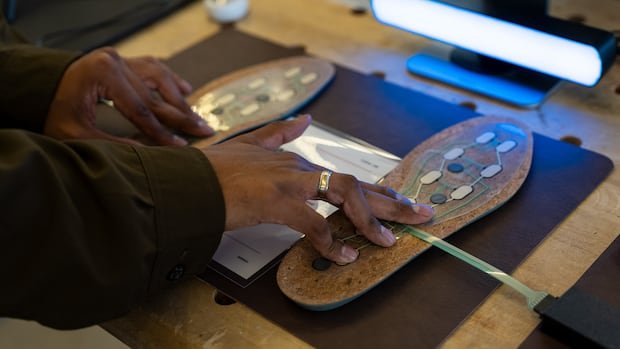
Zaboliyan co-founded Aurmada after experiencing a car accident injury, which led him to consider real-time solutions for monitoring and correcting gait issues. He highlighted the potential of AI-integrated clothing to monitor vital signs, analyze movements, and even detect blind spots or nearby objects. Aurmada showcased its innovative designs at a recent technology event in Toronto, featuring shoe sole sensors for weight distribution analysis and potentially aiding in injury rehabilitation.
Aurmada is also developing AI-powered sensors that can be seamlessly integrated into clothing, acting as virtual assistants capable of responding to queries. To ensure functionality, the team is researching fabrics woven with metals like copper or silver to shield the sensors from external interference. Zaboliyan envisions incorporating lightweight solar panels into the fabrics to power the embedded technology.
In addition to high-tech innovations, Aurmada is working on “low-tech” solutions, such as a vest with a device that regulates temperature and lightweight jackets equipped with fans for cooling, powered by portable chargers. While these are prototypes, the company has introduced non-AI products like bulletproof shirts made from Kevlar and socks with conductive threads for muscle stimulation.
The integration of technology into fashion has been an ongoing trend, with examples like Adobe’s color-changing dress and Levi’s jacket connected to smartphones. Designers are exploring responsive fibers that interact with the environment, such as garments tracking heart rate and breathing to provide comfort during anxious moments. The Fashion Institute of Technology’s DTech Lab is a hub for experimenting with tech-infused fashion, envisioning AI features entering mainstream apparel and specialized clothing for fields like emergency response.
Despite the potential benefits, privacy concerns and apprehension towards AI could hinder the widespread adoption of AI-enhanced clothing. Experts predict that it may take several years for consumers to embrace this technology fully. However, as fashion and technology industries collaborate more closely, wearable technology could become more stylish and accepted by the general public within the next five to eight years.