


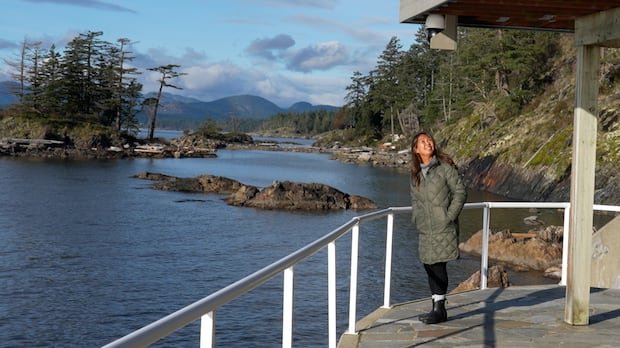

Residents along the coast of British Columbia are generously offering their private properties as hosts for innovative technology aimed at detecting whales to protect these marine mammals. Suzette Alvarez and Marshall Farris, residing near Halfmoon Bay on the Sunshine Coast, have installed a live camera beneath their house deck in May 2024, overlooking the Malaspina Strait. Additionally, they have submerged a hydrophone 20 meters deep into the ocean to capture sounds from vessels and marine life. Alvarez emphasized the importance of safeguarding these majestic animals, stating, “These animals are precious. They’re magnificent, and we need to do what we can to protect them.”
Recent incidents involving the death and injury of humpback whales due to vessel strikes on the B.C. coast have spurred action among concerned residents like Alvarez. Collaborating with scientists, they are deploying cutting-edge technology to aid in whale detection and conservation efforts. The Raincoast Conservation Foundation, comprised of conservationists and scientists, manages and analyzes data collected by the camera and hydrophone. Valeria Vergara, a scientist from the foundation, highlighted the significance of this technology in an area that is acoustically underrepresented, stating, “This is something that is quite needed there.”
The research conducted focuses on monitoring endangered marine mammal species by tracking their vocalizations and assessing the impact of human-induced noise, such as boat traffic, on their behavior. Vergara underscored the detrimental effects of underwater noise pollution, emphasizing its role in disrupting the communication and hunting abilities of humpback whales and orcas. She explained, “To listen to a singing humpback and then suddenly boat noise obliterates that song, it’s a really good way to get the general public and policymakers to understand just how dire the situation is.”
In a concerted effort to protect marine life, other residents like Chris Roper on Pender Island have joined the cause by hosting an infrared thermal camera known as WhaleSpotter. This technology, belonging to the W̱SÁNEĆ Marine Guardians program, aids in monitoring and advocating for the southern resident killer whales in the Salish Sea. Daniel Zitterbart, the chief scientist at WhaleSpotter, elaborated on how the thermal camera and artificial intelligence assist in whale protection by detecting the presence of whales through their blow temperature in real-time.
The deployment of such whale detection technology across British Columbia has the potential to enhance marine conservation efforts. Harald Yurk, a scientist from the Department of Fisheries and Oceans Canada, acknowledged the value of these tools in conjunction with on-site witnesses to safeguard marine mammals. He suggested utilizing this technology to implement speed limits for vessels when whales are detected, reducing the risk of fatal collisions.
Overall, these initiatives aim to raise awareness about marine mammal conservation and foster a sense of connection and responsibility towards protecting these vulnerable species. Residents like Alvarez hope that by enabling people to witness and hear the whales, a stronger bond with these creatures will be established, prompting continued efforts for their preservation.