


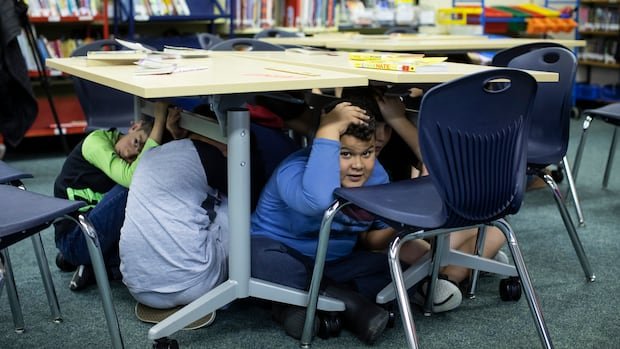

Minutes after a powerful 9.0 magnitude earthquake strikes off the coast of Vancouver Island during a summer day, a devastating scenario unfolds, leaving thousands of people in British Columbia either dead or injured. Subsequently, a tsunami, aftershocks, and widespread chaos add to the destruction. Distraught survivors flood hospitals in search of their loved ones, while vital road and rail connections suffer severe damage from the quake and subsequent flooding caused by the tsunami. The situation is compounded by shortages of food and medical supplies.
A comprehensive risk analysis conducted by the British Columbia government outlines the grim aftermath of a “megathrust” earthquake, projecting over 3,400 fatalities and more than 10,000 injuries on the day of the initial tremor. The report further predicts that additional casualties would result from triggered hazards like aftershocks, tsunamis, and fires. The estimated costs of this catastrophic event amount to $128 billion, with 18,000 buildings destroyed and 10,000 more severely damaged. The economic repercussions are substantial, with a halving of economic growth, substantial GDP losses, and job cuts expected to persist over the next decade. The report emphasizes that the cumulative impact of this disaster would surpass that of all previous calamities in British Columbia over the past two centuries.
The analysis indicates that the most severe damage could be concentrated on Vancouver Island and a 20-kilometer stretch along the coastal areas of the lower mainland, encompassing Vancouver from the U.S. border to the Sunshine Coast. The assessment is part of a broader disaster and climate risk evaluation dated October 2025, which also outlines several other extreme event scenarios, including severe flooding in the Fraser Valley, high-tide flooding on the southwest coast post a winter storm, urban interface fires, and prolonged drought conditions.
Edwin Nissen, a professor of earth and ocean sciences at the University of Victoria, noted that the report’s predictions on fatalities and building destruction are based on simulations. These simulations take into account factors like the intensity of ground shaking and the structural resilience of buildings based on their construction materials, location, and adherence to building codes. Nissen highlighted the varying safety levels of different types of homes, mentioning that wood-frame structures generally fare better during earthquakes compared to brick constructions. The proximity to bedrock also plays a crucial role in determining a building’s resistance to seismic activities.
While acknowledging the significant uncertainties associated with such predictions, Nissen stressed the importance of regularly updating emergency reports due to the evolving nature of scientific and engineering knowledge. The report highlights that the last earthquake of a similar magnitude in the region occurred in 1700, with researchers relying on oral histories from First Nations communities and scientific studies of the Cascadia fault to understand past seismic events. The likelihood of a similar catastrophic event occurring in the next three decades is estimated to be between two to ten percent, with the 2004 Indian Ocean earthquake serving as a comparable reference point in terms of tectonic characteristics and tsunami generation.
Nissen emphasized that seismic events of this magnitude do not follow a predefined schedule, underscoring the necessity for ongoing preparedness efforts. He pointed out the unpredictability of earthquake occurrences, with intervals between major events varying significantly. Despite limited seismic activity recorded in the Cascadia subduction zone, scientists remain vigilant, as the potential for a devastating earthquake persists. Nissen emphasized the need for continuous readiness and vigilance in the face of such natural disasters.
This article was initially published by the CBC.