



Gas prices in Canada have risen slightly due to tensions in the Middle East, following a joint U.S. and Israeli attack on Iran. The ongoing conflict disrupting oil tankers in the Strait of Hormuz, a crucial shipping route, is expected to keep prices high for as long as the situation persists, according to experts.
Rory Johnston, an oil markets researcher, highlighted the significance of the duration of the Strait of Hormuz closure in impacting oil prices. He mentioned that Canada’s oil industry may benefit from the instability, being perceived as a reliable source amidst geopolitical turmoil.
As of 12:30 p.m. ET on Monday, Brent crude reached $78.04 US before settling at $75.79 US, while West Texas Intermediate crude stood at $70.60 US by midday.
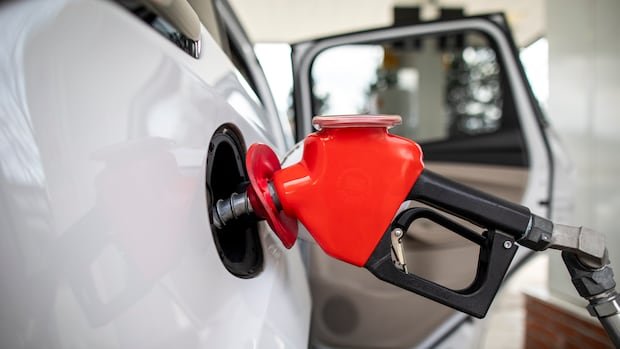
Retail pump prices have increased to 135.3 cents per liter, higher than a month ago but lower than a year ago. Although there is no immediate supply disruption, the U.S.-Iran conflict could lead to further price fluctuations and higher premiums due to geopolitical risks.
Iran’s warning to shippers in the Strait of Hormuz, a vital oil passage where 20% of global crude oil flows, has caused oil prices to surge. Recent attacks on oil tankers in the region have led to preventive measures, halting around 15 million barrels of crude oil daily.
Jorge Leon from Rystad Energy emphasized the critical nature of the Strait of Hormuz and the potential loss of 8-10 million barrels per day if the conflict escalates. With alternative infrastructure options limited, higher oil prices are expected to persist until the situation stabilizes.