


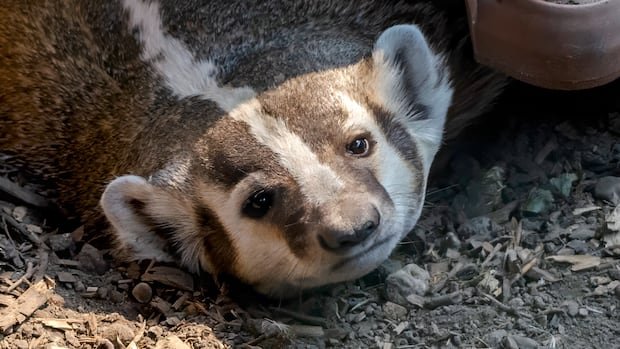

Recent federal assessment indicates that badgers, commonly found on the Prairies, face similar threats to the endangered populations in Ontario and British Columbia. The American badger, the sole badger species on this continent, falls under three populations as classified by the Committee on the Status of Endangered Wildlife in Canada (COSEWIC), which evaluates the at-risk status of native species and offers recommendations to the federal government.
In December, the advisory panel identified the “Kootenay, Prairies, and Rainy River” population, covering badgers in the Prairie provinces, parts of southeastern British Columbia, and northwestern Ontario, as “special concern.” The other two populations in southwestern Ontario and the B.C. Interior are labeled as endangered, with estimates of fewer than 250 adult badgers in each region.
Chris Johnson, a University of Northern British Columbia professor on the COSEWIC terrestrial mammals subcommittee, mentions the difficulty in estimating badger numbers due to their secretive nature. Johnson emphasizes the various risks and threats badgers encounter in Canada, including habitat loss, vehicle collisions, and intentional killings by landowners.
The “special concern” classification by COSEWIC requires attention to prevent a species from reaching threatened or endangered status at the federal level.
Vehicle collisions a common cause of badger fatalities
The government of Alberta runs a Wildlife Watch Program that monitors roadkill incidents in the province yearly. In 2024, 112 badger roadkill carcasses were recorded. Calgary wildlife biologist Chris Fisher notes that observing badgers, both alive and dead, along roads is not uncommon due to their attraction to digging burrows in sloped ditches.
Fisher explains that badgers are drawn to roadsides where they can easily dig burrows, with Richardson’s ground squirrels, a primary prey for badgers, frequently found in these areas. This combination of food availability and proximity to high-speed roads poses a significant threat to badgers.
Badgers, primarily active at night and relying heavily on their sense of smell, face increased risk from vehicle collisions due to poor visibility for drivers.
Habitat loss impacting ‘ecosystem engineers’
Endangered badger populations in southwestern Ontario and the B.C. Interior have limited available land compared to the expansive habitat on the Prairies, contributing to their endangered status. Fisher highlights the encroachment of sprawling suburban areas into former badger habitats as a significant factor in habitat loss.
Badgers play a crucial role in the North American grassland ecosystem, described as “ecosystem engineers” by University of Alberta professor Colleen Cassady St. Clair. Despite their importance, badgers face historical persecution from humans due to perceived threats to livestock and property damage caused by their burrows.
Although badgers are classified as sensitive species in Alberta since 2000, requiring special attention to prevent endangerment, they are considered furbearers in the province, allowing hunting and trapping under regulations. Additionally, landowners retain the right to eliminate badgers on their property.
Through his wildlife consultancy work, Fisher advocates for measures to protect sensitive species, such as maintaining a safe distance between active badger dens and ongoing construction activities.