


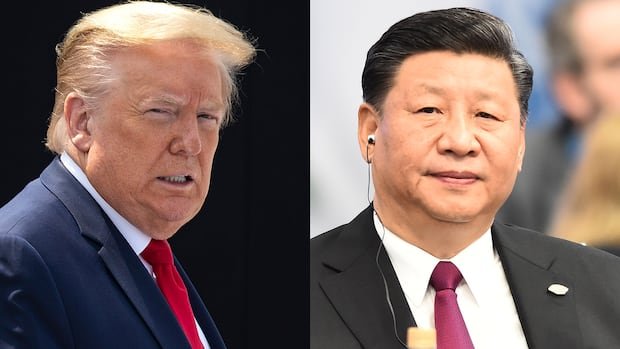

China continues to hold significant power over the U.S. through its control of the rare earth minerals market, even though the two nations have reached a preliminary trade agreement before a scheduled meeting between U.S. President Donald Trump and Chinese President Xi Jinping. The leaders are set to meet on Thursday during the annual Asia-Pacific Economic Cooperation (APEC) summit in Gyeongju, South Korea, amid an ongoing trade war with escalating tariffs that have the potential to disrupt the global economy. This demonstrates China’s readiness to utilize its strengths as bargaining tools in response to economic pressures from the White House.
Despite the uncertainties in the U.S.-China relationship, there was hope that tariffs could be avoided just before the upcoming meeting between Trump and Xi. Top officials from both countries recently disclosed a potential trade deal following extensive discussions held in various locations, including Geneva in May and Madrid in September. The U.S. Treasury Secretary, Scott Bessent, together with U.S. trade representative Jamieson Greer and Chinese Vice-Premier He Lifeng, revealed a substantial framework for the impending meeting between Xi and Trump at the Association of Southeast Asian Nations summit in Kuala Lumpur.
While the details of the agreement remain vague, Bessent indicated that it encompasses a final resolution for the transfer of TikTok’s U.S. operations to new ownership or face a ban, a move that Trump has previously postponed. Additionally, China may resume purchasing soybeans from U.S. farmers after halting orders during the trade war. Notably, the deal involves China postponing its export controls on rare earth minerals for a year, addressing a significant concern for Washington.
This agreement is seen as a significant acknowledgment of the potential repercussions of a trade breakdown. Zichen Wang, a research fellow at the Centre for China and Globalization, noted that the continued desire of both leaders to stabilize the crucial bilateral relationship serves as a vital safety valve amid deep-rooted structural competition.
Jonathan Czin, from the Brookings Institute, highlighted that the agreement strikes a delicate balance by allowing both sides to claim a degree of victory leading up to the meeting, while retaining room for further actions and potential challenges. Many unresolved issues, such as trade imbalances, China’s overcapacity, security in the South China Sea, and technological competition, are unlikely to be fully addressed during the upcoming Trump-Xi meeting due to the deep-seated mistrust between the two nations.
As the meeting approaches, observers anticipate that deals on smaller issues may be more feasible than reaching a comprehensive agreement given the complex nature of the U.S.-China relationship.