


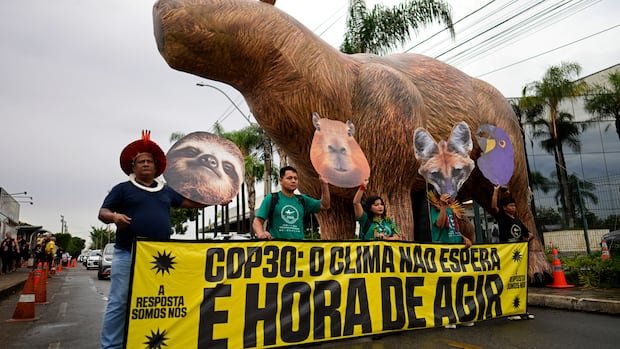

This year, all nations were tasked with the assignment of presenting upgraded strategies to combat climate change. However, according to a recent report by the United Nations, these plans have had minimal impact on reducing the future warming of the planet. The withdrawal of the United States from these efforts has further hindered progress, the report notes.
The latest climate action blueprints, required every five years under the 2015 Paris Agreement, are projected to decrease future warming by approximately 0.3 degrees Celsius (around 0.6 degrees Fahrenheit) compared to previous estimates. Only one-third of the countries that are parties to the agreement, representing 63% of global emissions, have submitted revised climate plans.
Canada submitted its updated plan in February, which has been deemed “highly insufficient” by the non-profit organization Climate Action Tracker. Environment and Climate Change Canada’s projections fall short of the emission reduction targets set for 2030 and 2035.
A recent report by the Institut de l’énergie Trottier at Polytechnique Montreal calls for coordinated policy adjustments to transition to a net-zero energy system this year.
Ross Linden-Fraser, a research lead at the Canadian Climate Institute, highlighted that while Canada has established a robust process for setting targets and plans, there have been shortcomings in implementation. He emphasized the need for the federal government to fulfill its commitments.
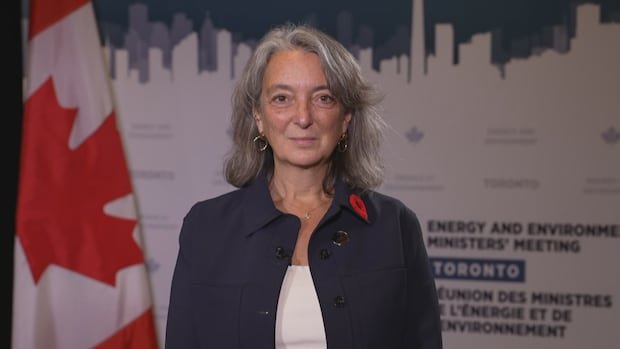
Following the G7 meeting in Toronto, Environment and Climate Change Minister Julie Dabrusin reassured that Canada remains a climate leader, despite policy changes. Dabrusin addressed inquiries regarding the achievability of Canada’s 2030 targets, acknowledging their ambitious nature.
The Trump administration’s policies in the United States, including the rollback of environmental regulations and obstacles to green energy initiatives, are anticipated to contribute an additional 0.1 degrees Celsius of warming, as per the UN Environment Program’s Emissions Gap report.
Adelle Thomas, vice-chair of a UN scientific panel, emphasized the significance of even minor temperature increases, particularly in impacting vulnerable communities and ecosystems worldwide. She highlighted the implications on heat waves, ocean heat waves, coral reef destruction, and long-term sea-level rise.
The rise in global average temperature is primarily driven by the release of greenhouse gases like carbon dioxide from burning fossil fuels. Therefore, countries’ climate plans must outline specific emissions reduction strategies and timelines.
If countries adhere to their commitments outlined in their plans, the Earth is projected to surpass the 1.5 degrees Celsius warming threshold agreed upon in the Paris Agreement by the next decade, reaching a warming of 2.3 to 2.5 degrees Celsius. Current policies are steering the planet towards a 2.8 degrees Celsius warming trajectory, setting the stage for the upcoming UN climate discussions in Belem, Brazil.
Even with rapid and substantial emission cuts from fossil fuels, global temperatures are expected to rise by at least 1.7 degrees Celsius this century, with subsequent efforts required to mitigate this increase, according to the report.
A decade ago, prior to the Paris Agreement, global warming was projected to reach 4 degrees Celsius. “We are