


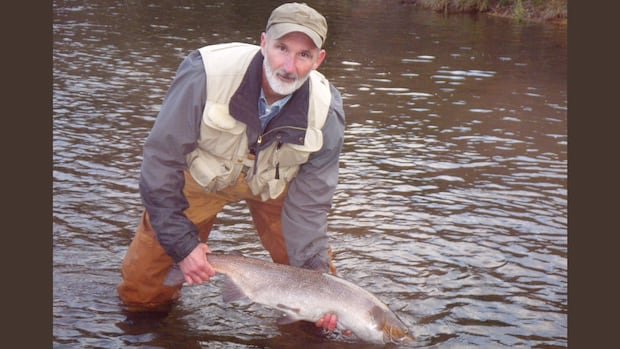

A federal advisory group has broadened its list of imperiled Atlantic salmon populations, causing concern among conservation organizations in Cape Breton. They worry this update could result in the cessation of recreational fishing for this iconic East Coast species in most areas of New Brunswick, Prince Edward Island, and Nova Scotia. However, the Department of Fisheries and Oceans emphasizes that while this outcome is a possibility, it is not definite.
The adjustment in evaluation status was disclosed during recent federal fisheries discussions with stakeholders after the Committee on the Status of Endangered Wildlife in Canada (COSEWIC) reevaluated salmon populations, including those along Nova Scotia’s entire coast and throughout the southern Gulf of St. Lawrence. Rene Aucoin, president of the Cheticamp River Salmon Association, expressed surprise at this change, particularly for the healthy salmon population in the western Cape Breton river, which has thrived for over a decade.
Despite concerns about declining salmon populations on Nova Scotia’s Atlantic coast, stakeholders like Bill Hailey, vice-president of the Margaree Salmon Association, argue that certain rivers, such as the Margaree, are faring well. They fear that further steps may be taken to include the Nova Scotia and southern Gulf salmon populations under the Species at Risk Act, potentially leading to restrictions on recreational angling activities.
While a permanent change to the salmon status may still be years away due to a lengthy consultation process involving the public, conservation groups, industry, and First Nations, stakeholders remain apprehensive. Robert Jones from DFO’s Gulf region emphasized that the decision-making process considers scientific data and socio-economic factors. The COSEWIC recommendations are expected in the fall, with subsequent evaluations factoring in economic, conservation, social, and Indigenous perspectives.
DFO initiated an Atlantic salmon conservation strategy last year to restore fish stocks, although critics argue that it lacks adequate funding. The fate of the salmon populations remains uncertain, with ongoing assessments to determine the necessity of listing them as endangered under federal legislation.