


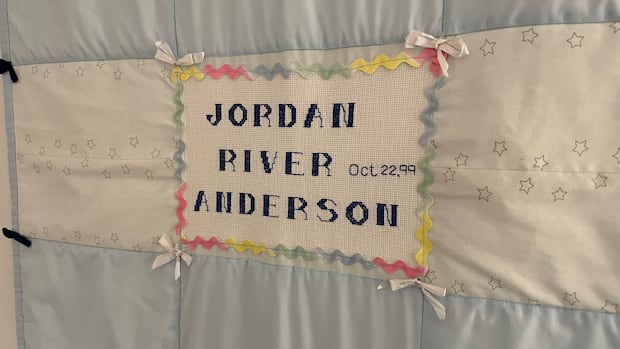

Advocates and healthcare professionals express ongoing concerns regarding First Nations children accessing services through Jordan’s Principle, despite the recent announcement from the Canadian government of a $1.55 billion funding allocation.
Randy Littlechild, president and chair of the First Nations Health Consortium (FNHC) based in Edmonton, which assists families with Jordan’s Principle applications, acknowledged the positive aspect of the funding but noted significant challenges remain in delivering services to the children.
“While the $1.55 billion is a substantial sum, it is allocated across the entire nation,” Littlechild remarked.
He further explained that if these funds were distributed among the over 600 First Nations in Canada, each would receive less than $3 million.
“I can easily see that amount being consumed very quickly,” he stated.
In late February, the federal government committed to funding for Jordan’s Principle until March 2027, following months of uncertainty about the program’s sustainability.
Jordan’s Principle is a legal framework that guarantees First Nations children receive timely access to public health and social services without administrative delays regarding which level of government (federal or provincial/territorial) is responsible for funding.
Last year, Littlechild indicated that the FNHC witnessed a decline in funds for dental care, occupational therapy, and educational assistance. He also pointed out the need to resolve a backlog of unresolved applications.
CBC Indigenous has previously reported that there was an existing backlog of 140,000 requests.
In a statement regarding the newly announced funds, the First Nations Child and Family Caring Society described the backlog as “a violation of children’s human rights.”
“Jordan’s Principle is not merely a goodwill initiative — it is a legal obligation recognized by the courts and the [Canadian Human Rights] Tribunal,” the statement emphasized.
Littlechild mentioned that children in Alberta have experienced a drop in available funding from approximately $40 million to under $12 million in the last fiscal year.
He described this as a concerning trend.
“We’ve observed that people are beginning to submit fewer requests because they feel it is futile,” Littlechild noted.
“Previously, when things were operating smoothly, requests would receive a response in about three to four weeks… now it might take six months or even up to a year.”
Concerns from Service Providers
Bonnie Cooke, director of audiology at Speech-Language & Audiology Canada (SAC), expressed relief at the announcement of the new funding but stressed that it is insufficient to resolve the issues surrounding service delivery.
SAC conducted a survey of 599 members last September and discovered that approximately 60 percent had collaborated with Jordan’s Principle recipients to provide services such as speech and language therapy, hearing aids, assistive listening devices, or cochlear implants.
“For infants and young children, any delays in receiving services can be extremely detrimental,” Cooke stated.
“There exists a critical window for language development that is essential for obtaining treatment… for speech and audiology services.”
For infants experiencing hearing loss, she warned that waiting beyond the first three months could hinder their language development for life.
Cooke noted that delays in receiving care under Jordan’s Principle can sometimes extend from 12 to 24 months, although some services may be provided more promptly.
With patients sometimes waiting up to two years for approval and experiencing lengthy delays for payment (Cooke mentioned one provider who waited eight to ten months for reimbursement), these delays can discourage healthcare providers from serving Jordan’s Principle patients.
“Our members have reported issues such as the lack of a designated contact person for inquiries; when they do reach out for assistance, there are significant delays in receiving responses,” Cooke explained.
“There needs to be a transparent process established.”
Cooke emphasized that further efforts are needed to ensure First Nations children have access to speech-language pathologists, audiologists, and communication health assistants, particularly in remote areas.