


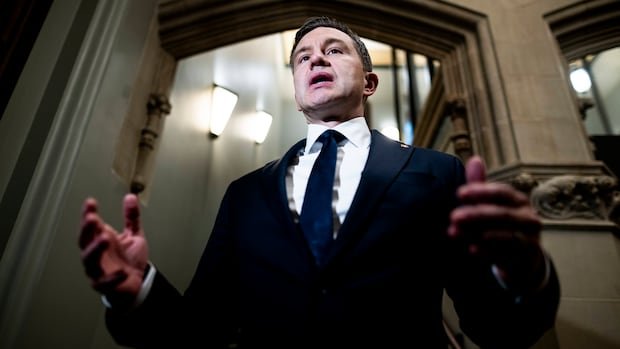

Conservative leader Pierre Poilievre, in a recent statement, emphasized his strategy of maintaining party unity by focusing on common ground among different conservative factions. He highlighted the importance of addressing shared priorities to ensure all segments of the party feel represented.
Poilievre’s emphasis on issues like low taxes, limited government, free enterprise, and crime prevention aligns with his strategy of appealing to a broad spectrum of conservative voters. This approach has reportedly led to minimal internal dissent within the party over the past few years.
However, Poilievre’s recent accusations against the RCMP, suggesting involvement in a political cover-up, have sparked controversy within the Conservative Party. His comments, shared on YouTube, have stirred dissent among some party members, marking the first significant challenge to his leadership since assuming office in September 2022.
In response to the backlash, Poilievre attempted to clarify his statements, particularly concerning former RCMP Commissioner Brenda Lucki. Despite efforts to address the controversy, questions remain about the evidence supporting Poilievre’s claims and potential implications for the RCMP under his leadership as a prospective prime minister.
While some Conservative MPs have refrained from publicly criticizing Poilievre, reports indicate growing doubts among certain party members regarding his suitability as a future prime minister. Former Harper aide Dimitri Soudas, among others, has raised concerns about Poilievre’s contentious approach and its impact on the party’s credibility and integrity.
The situation echoes past instances where Poilievre clashed with independent institutions, showcasing a pattern of confrontational politics. His combative stance, coupled with recent controversial remarks, has prompted reflection among Conservatives on their support for his leadership style and political direction.
As the Conservative Party prepares for its upcoming convention in January, Poilievre’s standing remains relatively strong among party loyalists. Nonetheless, the fallout from his remarks about the RCMP may prompt party members to reassess their alignment with his leadership approach and ideological positioning. Ultimately, Conservatives face the task of determining Poilievre’s place within their political landscape.