


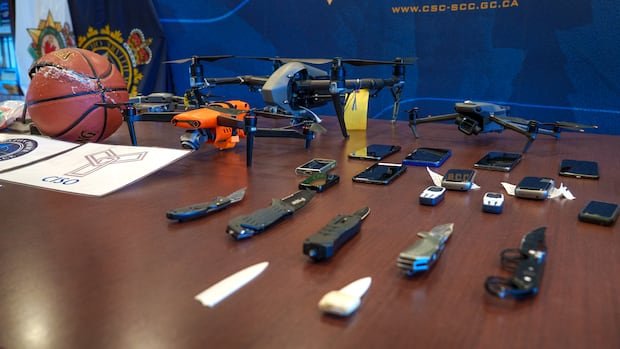

A drone with a modified mechanism for dropping deep-sea fishing lures, repurposed for smuggling, was among the items displayed as part of a pilot project targeting drone smuggling at Kingston prisons. The exhibit also showcased tightly wrapped packages emitting a strong odor of marijuana, knives, and small-sized phones. This seizure highlights the ongoing challenge faced by law enforcement and corrections officials as inmates and criminal organizations devise new methods to smuggle illicit goods into correctional facilities.
Over the past nine months, a collaborative task force comprising local police and correctional staff has been actively combating illegal smuggling activities both inside and outside prison walls. This pioneering initiative in Canada focuses specifically on addressing drone smuggling activities.
Sgt. Jonas Bonham, head of the Kingston Police Intelligence Unit leading this effort, emphasized the significant impact of the task force in reducing local drone drop incidents. The partnership with Correctional Service Canada (CSC) and the Canada Border Services Agency has been instrumental in disrupting the flow of contraband.
Drone smuggling first emerged in Canadian prisons around 2016, escalating rapidly with 899 reported incidents in 2023-2024 and a staggering 1,064 cases in the previous year. Kingston, home to four penitentiaries, became a key battleground in combating this illicit activity, particularly at the Collins Bay Institution.
The Collins Bay Institution, characterized by its distinct turrets and bright red roof, has become a prime target for drone smugglers due to its strategic location within the city. Bonham identified a nearby grocery store parking lot as a notorious launch site for much of the smuggling operations in Kingston, offering anonymity, quick access, and a direct path to the prison.
Smugglers have adopted ingenious tactics, such as disguising contraband in sports equipment like a basketball filled with illicit items, to evade detection. They have also utilized drones to make precise deliveries to cell windows, prompting security enhancements by CSC to counter such methods.
The task force’s investigations revealed a surge in weapon smuggling, including ceramic blades that evade metal detectors, posing serious safety risks within correctional facilities. With the inflated value of contraband inside prisons, criminals are willing to invest in drone technology despite the risks of interception.
The escalating battle for airspace near prisons, driven by rival gangs vying for control over smuggling routes, underscores the lucrative nature of contraband trade behind bars. Lee Chapelle, a former inmate turned consultant, emphasized the unprecedented threat posed by drone smuggling, likening it to a ticking time bomb due to the potential influx of dangerous items into prisons.
Law enforcement agencies have adapted to this evolving threat, upgrading charges against drone smugglers to reflect the severe consequences of introducing contraband into prisons. By sharing their expertise and collaborating with other agencies nationwide, Kingston Police aim to set a precedent in combating drone-related criminal activities.
The success of the task force in curbing contraband flow into Kingston’s prisons underscores the importance of collaborative efforts in addressing the evolving challenges posed by drone smuggling. Their proactive approach serves as a model for law enforcement agencies across the country in tackling this emerging threat.