


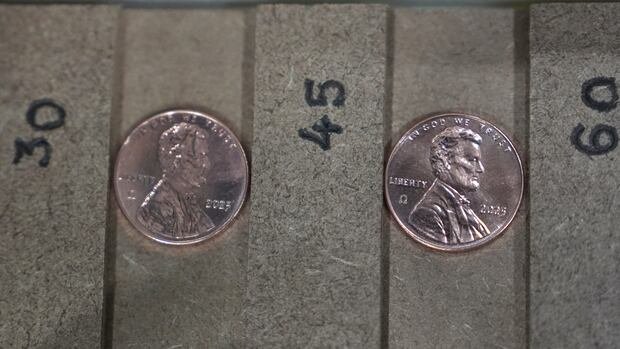

The U.S. Mint ceased production of the penny on Wednesday to cut costs and due to the diminishing significance of the one-cent coin that was once sufficient for buying snacks or candies. The final pennies were minted at the Philadelphia mint, the historical production site for the country’s smallest denomination coins since 1793, following the passage of the Coinage Act by Congress. Officials mentioned that the remaining pennies would be auctioned off.
U.S. Treasurer Brandon Beach, before striking the last penny, stated, “God bless America, and we’re going to save the taxpayers $56 million.” While pennies will still be accepted as legal tender, no new ones will be produced. This decision by the U.S. follows Canada’s discontinuation of penny production 13 years ago.
President Donald Trump initiated the end of penny production as the costs of minting a single penny escalated to nearly four cents, rendering the one-cent value somewhat obsolete in today’s economy. Although billions of pennies are in circulation, they are seldom crucial for modern financial transactions.
Despite the depreciation in value, many Americans hold sentimental attachments to pennies, viewing them as tokens of luck or enjoyable collectibles. Retailers expressed concerns as the end of penny production approached, citing a lack of government guidance on managing transactions in the absence of pennies.
Some businesses opted to round prices down to avoid discrepancies, while others requested customers to provide exact change. The discontinuation of penny production led to various creative solutions by retailers, such as offering incentives like free drinks in exchange for piles of pennies.
Jeff Lenard from the National Association of Convenience Stores expressed disappointment in the abrupt phase-out of pennies, stating, “We have been advocating abolition of the penny for 30 years. But this is not the way we wanted it to go.”
Some banks began rationing penny supplies, a counterintuitive outcome of addressing the perceived surplus of the coins. Despite this, pennies still maintain a favorable production cost-to-value ratio compared to nickels, which cost nearly 14 cents to produce. In contrast, dimes cost less than six cents to mint, and quarters nearly 15 cents.
In 1793, a penny could purchase items like biscuits, candles, or candies. Today, many pennies are stashed away in drawers or collections, symbolizing their shift from everyday use to memorabilia. Collectors and historians regard pennies as significant historical artifacts dating back over two centuries, reflecting various aspects of society such as politics, religion, and art.
Frank Holt, a retired professor from the University of Houston specializing in coin history, mourns the discontinuation of pennies, emphasizing their role in preserving national heritage and values through the mottos and designs imprinted on them.