


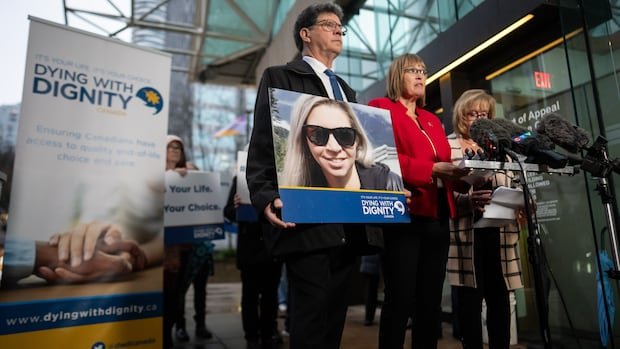

Faith-based health-care providers’ policy prohibiting medical assistance in dying is under scrutiny in the B.C. Supreme Court. The plaintiffs aim to eliminate the policy to prevent patients from having to relocate at the end of their lives. If the case escalates to the Supreme Court of Canada, it could have significant implications nationwide.
In Canada, the number of individuals receiving medical assistance in dying (MAID) is on the rise. In 2024, 16,499 patients received MAID, a notable increase from 9,950 in 2021, accounting for 5.1% of all deaths in Canada that year.
Transfers for MAID can occur for various reasons, such as a patient’s desire to transition from a hospital setting to pass away at home. Health Canada data indicates that in 2023, almost half of MAID transfers were due to facility policies, decreasing to a quarter in 2024. Information for 2021 and 2022 was not available.
The ongoing trial in B.C. reveals that around one-third of MAID-related transfers in 2024 were influenced by the facility’s policy. Conversely, provinces like Manitoba (77%) and Alberta (74%) experience more frequent transfers due to facility policies. In contrast, territories like P.E.I., Newfoundland, and Quebec, where faith-based facilities must permit MAID, have fewer transfers.
Different provinces have varying approaches to MAID policies. For instance, B.C., Alberta, Manitoba, New Brunswick, Newfoundland and Labrador mandate faith-based institutions to provide information on MAID but not necessarily allow it on-site. Saskatchewan and Ontario leave the decision to individual institutions.
Quebec requires long-term and palliative care facilities to permit assessment and provision of MAID, regardless of their faith affiliation. In Nova Scotia, while the policy is unclear, at least one faith-based hospital offers a designated area for MAID administration.
P.E.I. and Yukon lack faith-based end-of-life care facilities, while the stance in the Northwest Territories and Nunavut remains unknown. The law does not compel staff at faith-based facilities to participate in MAID procedures if they oppose them.
The outcome of the B.C. court case may lead to significant changes in how medical assistance in dying is managed across Canada.