


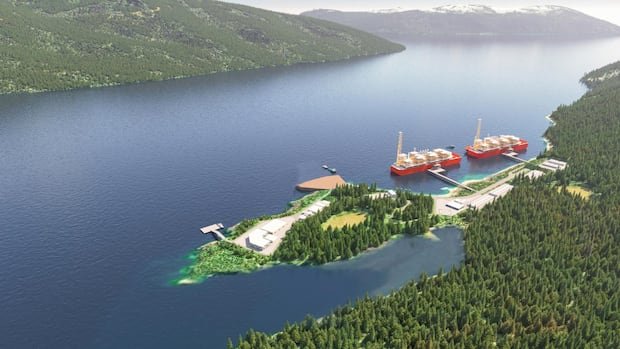

A second German energy company has shown interest in procuring liquefied natural gas from the Ksi Lisims project planned for the northern British Columbia coast, with partners nearing a final decision. Duesseldorf-based Uniper and Ksi Lisims LNG announced a letter of interest for the purchase of two million tonnes of gas annually, starting as early as 2032. The agreement sets out key commercial terms for a potential supply and purchase deal with Uniper, which focuses on markets in Germany, the United Kingdom, Sweden, and the Netherlands.
Uniper, with significant power generating capacity and a notable LNG importing presence in northwestern Europe, was taken over by the German government during the 2022 energy crisis but is currently in the process of being privatized. Diversifying their LNG supply is a strategic goal for Uniper, as stated by CEO Michael Lewis, who emphasized Canada’s appealing environment with abundant gas resources, strong political stability, and dependable regulatory frameworks.
The Ksi Lisims project, spearheaded by Houston-based Western LNG in collaboration with Rockies LNG and the Nisga’a Nation, aims to operate a floating plant on Pearse Island near the Alaska border, exporting up to 12 million tonnes of LNG annually. While the project has regulatory approval, the final investment decision is pending, with securing long-term supply agreements being a critical step towards that milestone.
Germany’s interest in Canadian gas, despite geographical challenges, stems from the need to diversify gas sources following geopolitical events such as Russia’s invasion of Ukraine and disruptions in Middle Eastern LNG shipments due to regional conflicts. Potential transport routes for LNG from Ksi Lisims to Germany include the Panama Canal or swap deals with other companies closer to the destination.
The recent Uniper-Ksi Lisims agreement is seen as a strategic move for both Canada and Germany, showcasing energy security cooperation. However, some observers, like Alex Walker from Environmental Defence, view it more as a political gesture than a significant energy security advancement. The project’s progress is also hindered by opposition from certain First Nations groups and legal disputes surrounding the pipeline infrastructure.
In related news, the Canada Pension Plan Investment Board is reportedly considering a bid for Uniper, indicating further interest in the energy sector. Despite ongoing challenges, the Ksi Lisims project represents a complex endeavor that requires navigating various economic, environmental, and regulatory considerations.