


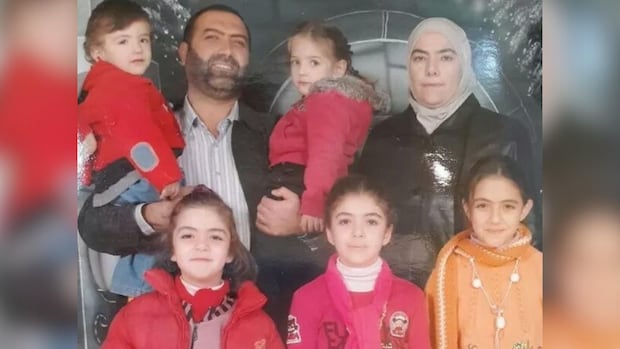

School uniforms belonging to children were draped over the door, while their academic workbooks remained on the desks. Dusty toys were still scattered across the floor.
This was the scene Naila Al-Abbasi encountered in her sister Rania’s apartment in Syria, nearly 12 years after Rania was taken along with her six children into the secret prisons and detention centers of the former regime.
On February 25, Al-Abbasi traveled from Saudi Arabia to visit the residence located in the Dummar Project, an upscale area northwest of Damascus, the Syrian capital.
“The air is thick with the scent of death. The walls and curtains seem to weep for their loss,” Al-Abbasi shared on Instagram.
Every surface was coated in grime. The remains of birds that had flown in were dotting the floor.
This space had once been a lively home for six children: Dima, 13; Entisar, 12; Najah, 11; Alaa, 8; Ahmed, 6; and Layan, 1.
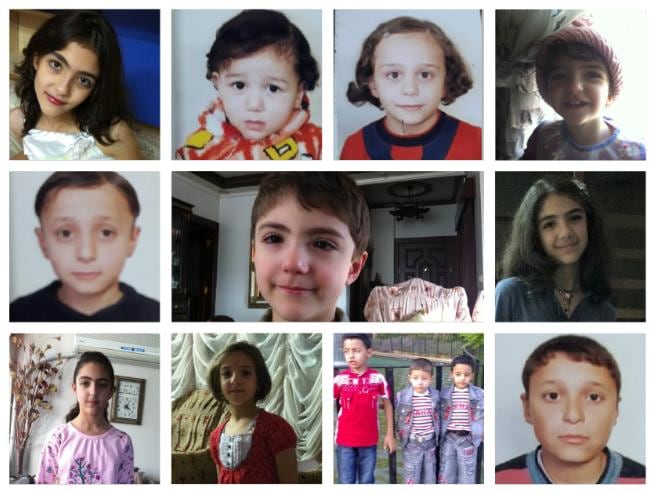
In January, the Syrian Network for Human Rights urged for an ‘immediate and thorough’ investigation into organizations that received numerous children from the security agencies of the Assad regime, stripping them of their identities. (Syrian Network for Human Rights)
Rania’s brother, Hassan Al-Abbasi, has been seeking information about their whereabouts for years.
Since the fall of Bashar al-Assad’s government last December, he has been actively searching for the children. However, his inquiries have gone without response, with no updates on the family’s situation since March 2013.
“It’s incredibly challenging, as none of the children have been located, and this was our family’s first return to the home in 12 years,” Hassan expressed to CBC News from Ottawa, where he resides with his wife and kids.
“It was very painful.”
-
Graffiti left on walls of Assad’s prisons expresses fears, loves of tormented Syrians
-
With overthrow of Assad regime, Syrian Canadian recalls 20 years of ‘torment’ inside its prisons
Children likely sent to orphanages
On March 9, 2013, Rania Al-Abbasi’s husband, Abdul Rahman Yasin, was arrested by members of Assad’s military intelligence in their home, who then returned to steal gold, money, three cars, computers, mobile phones, and documents related to their properties and Al-Abbasi’s dental clinic.
Just two days later, intelligence agents returned to take Rania, her six children, and her secretary, Majdoline Al-Qady, who was present at that time.
The couple faced accusations of providing humanitarian aid to those in need during the outbreak of the Syrian revolution in March 2011.
Rania’s case swiftly gained notoriety, shedding light on the issue of missing detainees — both parents and their children.
Hassan suspects the children remained with Rania in detention facilities, based on testimonies from other detainees, before potentially being moved to orphanages or child-care centers where their identities and family ties were erased. However, verifying this information has proven impossible without access to the relevant documentation.
The disappearance of entire families represents one of the many atrocities perpetrated under Assad’s oppressive regime.
Reports of this practice were received by the Syrian Network for Human Rights several years ago, indicating it involved institutions such as the SOS Children’s Villages Syria.
In a statement to CBC News on February 25, the organization acknowledged “concerns about children placed in care organizations, including SOS Children’s Villages Syria, by the previous government.”
“Throughout the conflict, numerous children were unnecessarily separated from their families and placed in alternative care services by authorities without adequate documentation of their origins.”
Systematic arrests of children and families
Hassan stated that his family spent thousands of dollars attempting to obtain information from prison officials and those involved in these operations regarding Rania and her family, yet they were consistently met with unverifiable information and no real understanding of their location.
He shared that the children’s paternal aunt visited a Syrian detention center in 2013 to seek the release of the children after their detention, only to be detained herself for three months.
“The systematic arrests of children and families were part of a broader strategy. The regime could have returned the children to their relatives, but instead, they threatened to detain them as well if they spoke out,” Hassan remarked.
In 2022, the family hired a lawyer to investigate orphanages after learning that the regime was placing children of those detained or killed in prisons there. However, this inquiry yielded no answers.
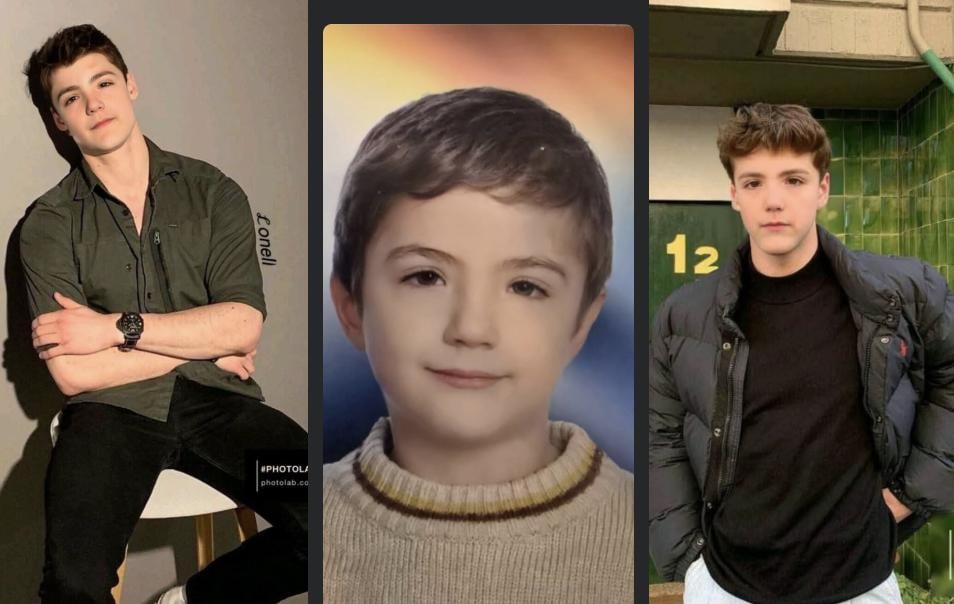
Born in 2007, Rania Al-Abbasi’s son Ahmed Abdel Rahman Yasin would now be 17 or 18. The images on the left and right are AI-generated to illustrate what he may look like to aid relatives in their search for him. (Submitted by Hassan Al Abbasi)
In subsequent years, a worker at one of the orphanages informed Hassan that he recognized four of the six children, although their names had been altered. Despite his efforts, Hassan was unable to confirm this information.
“These children were raised in our home … if they are deceased, please send us any photos; at least we will know they were killed,” Hassan appealed to those involved with the former regime’s operations.
At least 3,700 children missing
The Syrian Network for Human Rights reports that verified records indicate approximately 3,700 children have been forcibly disappeared by the Assad regime since 2011, although many believe the actual number exceeds 10,000.
In late January, SNHR called upon the transitional Syrian government to carry out an “immediate and thorough” investigation into all organizations that received children from the previous regime.
“Many family members believe that the detained families — the child, mother, and father — were all killed by the regime … but numerous children remain in these organizations,” Hassan stated.
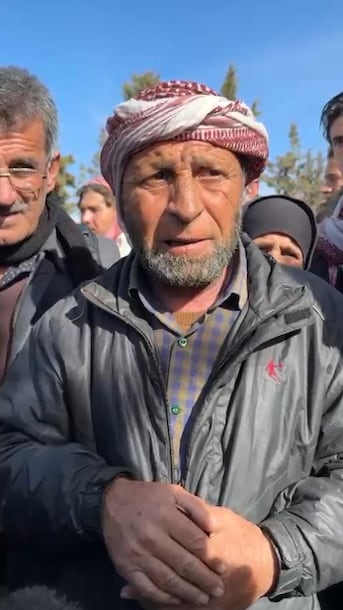
After the exile of former Syrian president Bashar al-Assad, Hosni Korno says he has no hope that his four sons, who were arrested at the height of the Arab Spring in 2013, are still alive.
SOS Children’s Villages indicated that since management changes, it has only been accepting children with documentation starting in 2018.
“We regret the untenable circumstances we faced when taking in these children and strongly disapprove of such practices, as children should never be separated from their families unless it serves their best interest,” the organization stated in their release.
The fate of Rania Al-Abbasi remains uncertain, along with that of countless other detainees in Assad’s prisons. Mass graves were discovered after the regime’s collapse, but it may take years to identify the remains.
Father believed to have been killed after a month in custody
Hassan believes his brother-in-law was tortured and murdered roughly a month after his detention. This was concluded after they identified Abdul Rahman Yasin in one of the 53,000 photographs released by a defector from the Syrian military police, known as “Caesar,” who smuggled these images out of Syria to document torture and brutal killings in Assad’s prisons.
-
CBC in Syria
Rebel victory in Syria exposes horrors of Saydnaya prison as families search for traces of the disappeared
-
After Assad, these 3 women are working to build a just and peaceful Syria
In the ensuing years, Hassan mentioned that relatives would ask individuals to visit Al-Abbasi and Yasin’s home to check on its condition and see what remained. However, they were too fearful that it was still being monitored or occupied by intelligence agents.
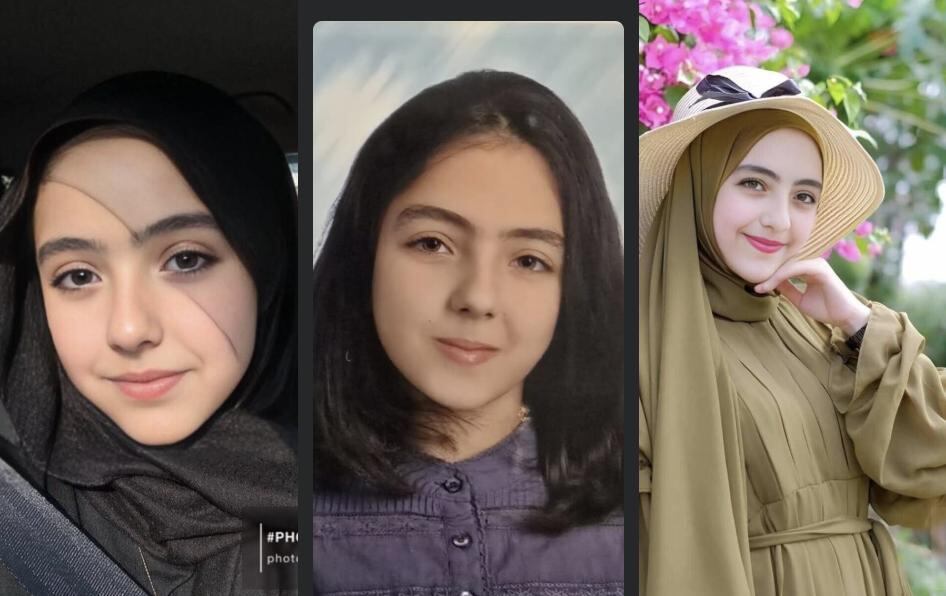
The oldest of the six children, Dima Yasin, would now be 24 or 25. The images on the left and right are AI-generated to suggest what she might look like today. (Submitted by Hassan Al-Abbasi)
Hassan expressed greater concern that the children might not even be in orphanages or possibly even within the country.
“We hold onto hope. If they have passed, then they are martyrs. If they are still alive, we will keep searching for them,” he stated.
“This is just one disaster among many. To this day, we have yet to grasp the full extent of these crimes — we have only scratched the surface.”