


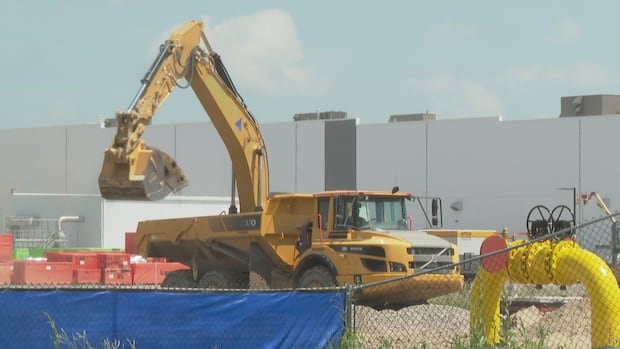

Workers at a large electric vehicle (EV) battery plant project in southwestern Ontario, supported by public funding, have encountered multiple health and safety risks, such as high levels of carbon monoxide, electrical hazards, and flooded parking areas, as per government documents obtained by CBC News. The records reveal that provincial inspectors have visited the site numerous times since construction commenced in 2022, issuing over 100 directives to NextStar Energy, the company overseeing the initiative, pertaining to health and safety concerns.
The directives included 10 stop work orders for specific sections of the site until the identified issues were addressed, with potential penalties and imprisonment for non-compliance under the Occupational Health and Safety Act (OHSA). Despite this, NextStar, a collaboration between Stellantis and LG Energy Solution, has adhered to most recent orders.
The health and safety grievances have escalated to the provincial cabinet level, with Labour Minister David Piccini engaging with building trades unions involved in the project to discuss potential solutions. Notably, concerns raised by workers coincide with the project’s ambition to generate around 2,500 jobs and receive substantial financial incentives from both provincial and federal governments.
NextStar recently concluded the construction phase, affirming its pride in achieving milestones for Canada’s inaugural large-scale battery manufacturing facility. The company highlighted its commitment to meeting or surpassing industry standards, as evidenced by the receipt of an occupancy permit, alongside celebrating eight million safe work hours earlier this year.
Internal reports and field visit records point to ongoing health and safety challenges at the plant, with issues including air quality concerns, washroom accessibility, electrical safety protocols, work supervision deficiencies, and water accumulation problems. Despite regulatory interventions and corrective actions, the project remains under scrutiny for persisting health and safety lapses.
The NextStar project serves as a reminder of the imperative for stringent safety measures in large-scale industrial ventures, underscoring the significance of prioritizing worker well-being amidst ambitious manufacturing initiatives.