


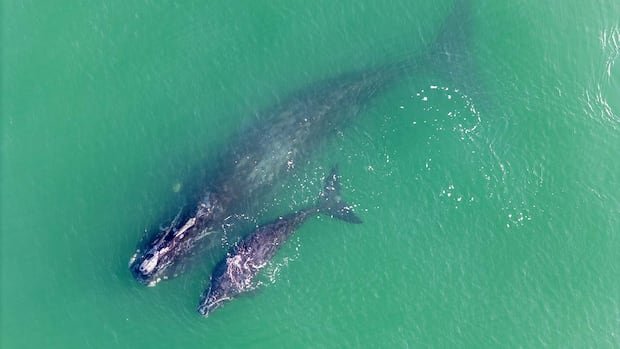

North Atlantic right whale researchers on both sides of the border are expressing cautious optimism following an increase in the number of new calves born this year. A total of twenty-three calves were born during the calving season from November to April off the southeastern U.S., marking the highest number recorded since 2009.
Amy Warren, a scientific program officer at the New England Aquarium’s Anderson Cabot Center for Ocean Life, stated that the twenty-three calves born this year bring hope. However, the survival of these calves into adulthood is crucial for the population to thrive. North Atlantic right whales are critically endangered, with only 380 remaining on the planet as per the most recent official estimate from 2024.
Over the past few decades, the number of new calves born annually has declined significantly. Warren highlighted that while about 20 new calves were born each year two to three decades ago, the average over the past decade has been closer to 10 to 15, with no known calves born in 2018.
Factors influencing the increase in calves this year remain uncertain, but the health of the mothers, including their food intake, plays a significant role. North Atlantic right whales, which eat a specific plankton type, have been affected by climate change pushing their food sources further north, leaving them with insufficient food in their calving grounds off Florida and Georgia.
Ensuring the mothers’ health, including their ability to store enough fat to sustain themselves for months without food while caring for a calf, is crucial. Human-induced stressors such as ocean noise, ship traffic, vessel strikes, and entanglements in fishing gear also impact the whales’ well-being. Conservation measures, including fishery shutdowns and restrictions on marine vessel speed, have been implemented to protect the whales in Canadian and U.S. waters.
Researchers have noted not only an increase in the number of calves born this year but also a smaller gap between births for some mothers. This positive trend indicates healthier mothers, potentially contributing to faster population growth. Efforts to protect the species and reverse the declining population include the need for about 50 calves to be born annually for several years.
North Atlantic right whales have been observed moving northward and were recently detected in the Gulf of St. Lawrence for the first time this year. Researchers remain hopeful for the species’ future but stress the importance of sustained efforts to ensure their survival and population growth.