


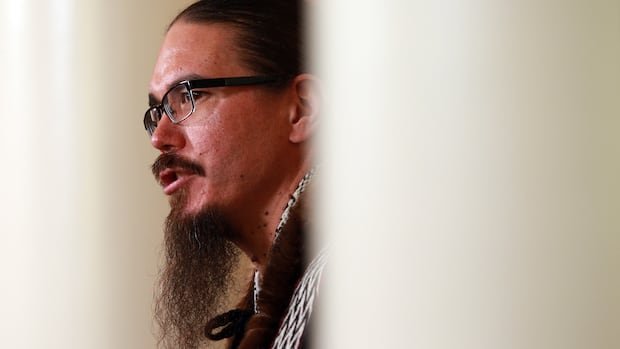

A group of Indigenous leaders from British Columbia has traveled to Calgary to deliver a direct message to pipeline executives: avoid investing in a new bitumen pipeline to the northwest coast or face a prolonged legal battle.
Jason Alsop, the President of the Haida Nation, emphasized the responsibility to protect the ocean and food security it offers, expressing concerns about the risks posed by crude tankers in northern B.C. waters. He stated their readiness to utilize all available means to uphold this duty, highlighting the significant legal and financial risks associated with investing in a pipeline to the north coast.
Arnold Clifton, Chief councillor of the Gitga’at First Nation, referenced the past successful opposition against Enbridge Inc.’s Northern Gateway proposal, underscoring the united front Indigenous communities would present against any similar future projects. He stressed the strengthened resolve and unity within these communities to oppose such ventures.
During their visit to Calgary, the delegation held meetings with senior officials from Pembina Pipeline Corp. and Trans Mountain Corp. While Pembina Pipeline is predominantly engaged in transporting natural gas and is involved in a liquefied natural gas project in Kitimat, it has not shown interest in pursuing a new bitumen pipeline. On the other hand, Trans Mountain, a government-owned entity operating an existing pipeline connecting Alberta crude to Vancouver, has been advising the Alberta government on preliminary plans for a new oil pipeline while focusing on expanding its current infrastructure.
Both companies engaged positively with the Indigenous leaders, with Trans Mountain’s CEO, Mark Maki, acknowledging the importance of understanding their perspectives during a respectful dialogue.
The delegation extended invitations to other oil and gas pipeline companies, cautioning them about the risks associated with supporting a B.C. oil pipeline. The Alberta government intends to submit a proposal for the new pipeline to the federal major projects office, aiming to reduce risks to attract private sector investment.
The proposed B.C. pipeline, part of a broader energy agreement between the Alberta and federal governments, may involve a collaboration with a carbon capture and storage project in Alberta. The government prefers Prince Rupert as the pipeline’s endpoint, considering its advantageous port facilities and shorter shipping distance to Asia. However, there are considerations for an alternative southern route to Vancouver to potentially encounter fewer environmental obstacles and less opposition.
Hereditary Chief Darin Swanson of the Haida Nation reiterated the unwavering stance against a bitumen pipeline and tanker port, emphasizing the pristine nature of their beaches and the invaluable marine resources at risk. He firmly stated that no amount of financial gain or job creation would outweigh the environmental hazards posed by such a project.