


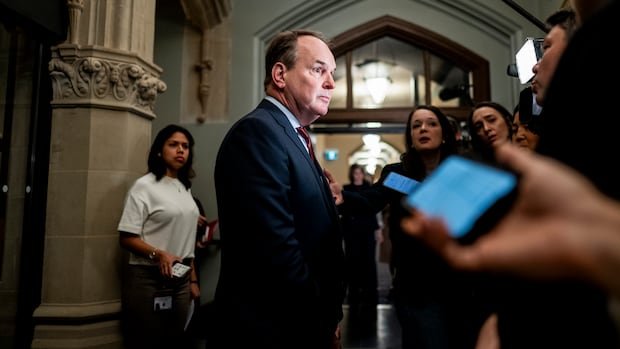

Liberal House leader Steve MacKinnon expressed his concerns on Tuesday about the opposition’s potential lack of support for the government’s upcoming budget, while also dismissing certain demands put forth by other parties. With the budget set to be tabled on November 4, the Liberal government requires the cooperation of at least one other party to pass it, as it is a confidence vote that could trigger another election if not successful.
MacKinnon conveyed unease about opposition parties ruling out the chance of voting in favor of the budget. Both the Conservative Party and the Bloc Québécois have outlined their priorities for the budget. Conservative Leader Pierre Poilievre called for an “affordable budget” featuring broad tax cuts and keeping the deficit below $42 billion. On the other hand, the Bloc Québécois listed six key priorities, such as an increase in federal health transfers, new infrastructure investments, expansion of the rapid housing initiative, interest-free loans for first-time homebuyers, and boosting Old Age Security payments for individuals aged 65 to 75.
Despite MacKinnon’s concerns, he dismissed the demands made by the Conservative Party and the Bloc Québécois, labeling them as unreasonable. NDP interim Leader Don Davies responded to MacKinnon’s statements by emphasizing that it is the government’s responsibility to secure support for its budget. Davies stated that the decision on whether there will be an election rests with Prime Minister Mark Carney, highlighting the need for the government to craft a budget that can win the backing of at least one opposition party.
Davies, who leads a reduced NDP caucus, indicated that the party’s support or abstention could influence the budget vote outcome. Carney has hinted at a larger deficit compared to the previous year, although the Liberals have pledged to balance operational spending within three years. The Parliamentary Budget Officer’s recent report projected an annual deficit of $68.5 billion for this year, an increase from $51.7 billion last year, without accounting for plans to enhance defense spending to meet NATO benchmarks by 2035 or the proposed reduction in public service spending over the next three years.