



Canada’s food regulator has imposed a $10,000 fine on a Loblaw-owned establishment for falsely promoting imported goods as Canadian products. The Canadian Food Inspection Agency (CFIA) informed CBC News that a Toronto Superstore inaccurately utilized “maple leaf advertising decals” and a “Product of Canada” statement in an in-store exhibit to endorse a foreign item. This misrepresentation misled consumers about the product’s origin, as per the CFIA in an email. The fine was issued on Jan. 15, but the announcement was delayed until this week.
The CFIA can levy fines of up to $15,000 per violation. Both the federal agency and Loblaw declined to disclose the specific product that led to the penalty. The Superstore, situated on Gerry Fitzgerald Drive in the city’s north end, acknowledged the difficulty of ensuring accurate country-of-origin labeling due to managing vast inventory. Loblaw expressed regret for any confusion caused and highlighted ongoing efforts to enhance their processes.
The surge in the buy-Canadian movement, triggered by U.S. President Donald Trump’s tariff disputes and remarks about Canada potentially becoming the 51st state, prompted grocers to capitalize on Canadian branding inaccuracies. The CFIA’s fine on the Superstore follows a previous CBC News investigation that uncovered major grocers promoting imported goods with false Canadian affiliations, a practice termed “maple washing.”
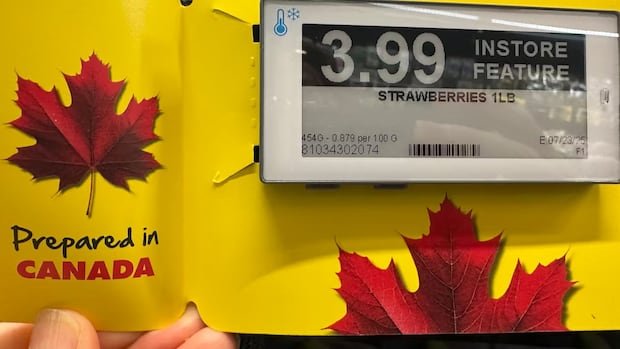
Federal regulations mandate that food labels and in-store signage must be truthful and not deceptive. Instances of misrepresentation included a Toronto Sobeys advertising raw almonds with Canadian branding despite being imported, and a Loblaw-owned Toronto No Frills displaying American strawberries labeled as “Prepared in Canada.”
Shoppers expressed dissatisfaction last September over the CFIA’s lack of fines in multiple “maple washing” cases identified by the agency. The CFIA emphasized its commitment to addressing food mislabeling and enforcing appropriate actions based on various factors, including risk assessments and the company’s compliance history.
The CFIA is yet to clarify why Sobeys evaded fines following a mislabeling investigation last April concerning a Safeway store outside Edmonton advertising imported avocado oil as Canadian. Sheila Young, who reported the mislabeling, urged the CFIA to enforce fines promptly, emphasizing the need for accountability in such cases. The CFIA’s guidelines distinguish between “Product of Canada” and “Made in Canada” labels based on the origin and transformation of the food product.