


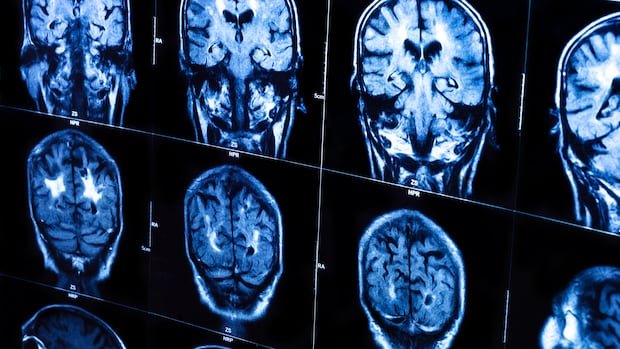

During a surgical procedure last October, Dave Evans had a pituitary gland tumour removed by a surgical team at the London Health Sciences Centre (LHSC) in Ontario. The team, led by neurosurgeon Dr. Neil Duggal, operated in a small area near the base of Evans’s brain, aiming to extract a growth that was causing him severe fatigue, headaches, and vision impairment. The delicate surgery was complicated by the proximity of crucial arteries and nerves surrounding the pituitary gland, which regulates essential bodily functions through hormone release.
Dr. Duggal emphasized the need for precision to avoid damaging arteries, which could lead to severe complications like hemorrhage, stroke, or death. Typically, surgical teams rely on post-operative MRI scans to assess the extent of tumour removal. However, in this case, the LHSC team utilized a mobile MRI mid-procedure to ensure close to 99% removal of the benign tumour, significantly improving Evans’s prognosis.
The use of mobile MRI units, though sounding futuristic, has been increasingly adopted in Canadian healthcare facilities for various medical procedures, including pituitary tumour surgeries and emergency diagnoses like strokes and brain hemorrhages.
Dr. Duggal hailed the introduction of mobile MRI technology as revolutionary, having employed it in multiple surgeries to enhance patient outcomes and minimize the need for additional procedures.
MRI machines, utilizing powerful magnets and radio waves, and CT scanners, relying on X-rays, traditionally operate as stationary devices within hospitals. However, the emergence of mobile versions, equipped with lower-strength components and AI capabilities for remote operation, has expanded the scope of medical imaging.
Recent data indicates a growing adoption of mobile MRI and CT scanners in Canada, driven by technological advancements, cost-efficiency, and the potential to enhance patient care, particularly in rural and remote areas.
Dr. Kevin Sheth, a neuroscientist at Yale University, emphasized the promising clinical applications of portable MRIs, highlighting their efficacy in detecting strokes and the ongoing need for comprehensive research to maximize their benefits for patients.
Advantages of mobile scanners include lower initial costs compared to traditional devices, facilitating accessibility for healthcare facilities that may not afford larger machines.
Dr. Shuaib, a neurology professor at the University of Alberta, underscored the critical role of mobile stroke units in delivering prompt care and improving outcomes for stroke patients, emphasizing the life-saving impact of timely interventions.
The potential of mobile MRI and CT scanners in transforming healthcare delivery is recognized by experts, who stress the importance of technological advancements, reliable wireless connectivity, and trained personnel for optimal utilization of these portable imaging tools.
Despite the significant progress in mobile imaging technology, researchers caution that challenges like image quality and connectivity issues in rural areas need to be addressed for broader integration and improved patient care.
Overall, the evolving landscape of mobile scanning technologies holds immense promise for enhancing diagnostic capabilities, treatment outcomes, and healthcare accessibility, heralding a new era in medical imaging.
As pioneers like the LHSC team in London and the mobile stroke unit in Edmonton showcase the transformative impact of mobile imaging, ongoing research and advancements will continue to drive innovation and improve patient care across diverse healthcare settings.